When my son turned his back on his daughter, my husband and I didn’t hesitate. We vowed that Ava would never lack the love or stability her father refused to give.
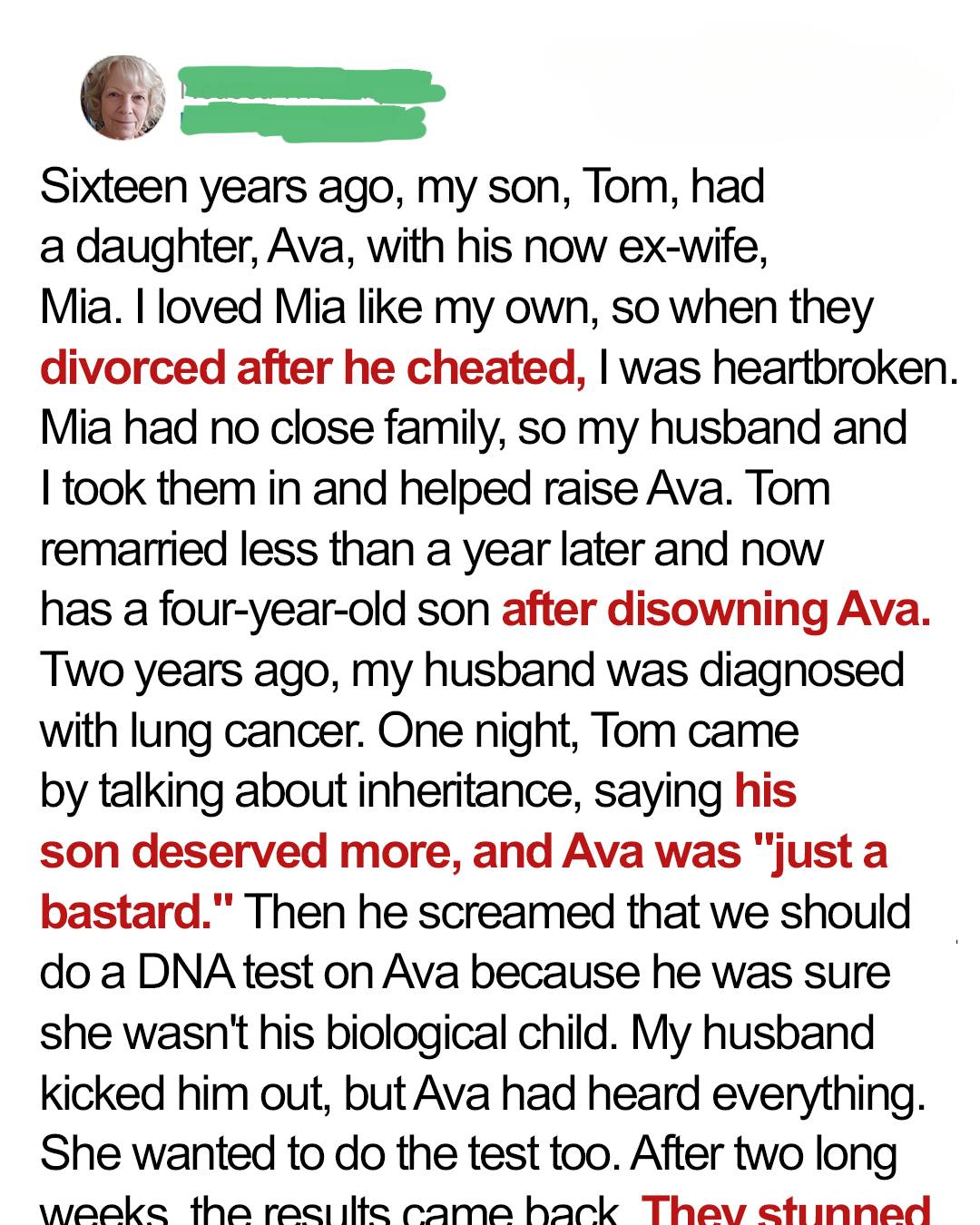
Tom and Mia were teenagers when Ava was born — young, impulsive, and unprepared. While Mia struggled to raise her, Tom’s infidelity and denial only deepened the pain. He even claimed Ava wasn’t his, leaving wounds that words alone could inflict.
Gary and I stepped in, giving Ava the warmth and safety she needed. She learned to trust again, and as Mia balanced work and school, we became her foundation. Gary, especially, was her rock — at every recital, soccer game, and scraped knee, he was there.
When Gary was diagnosed with cancer, Ava was twelve. Despite her fear, she stayed by his side through every appointment, showing courage far beyond her years. The child who once needed care became his comfort.
Tom stayed distant. He missed every milestone, every moment. Then, out of nowhere, he appeared — angry, demanding a share of the inheritance, claiming Ava wasn’t his. He insisted on a DNA test. Ava, though heartbroken, agreed.
Two weeks later, the results confirmed 99.9999% paternity. Ava faced him calmly, telling him she finally understood — his absence was never about her. When he asked what she felt now, she replied simply, “I don’t care anymore.”
Gary, weak but proud, took her hand and whispered, “You’ve made me proud a thousand times.” In that moment, it was clear: family isn’t defined by blood, but by love, loyalty, and presence.
That night, Ava sat by Gary’s bed, brushing back his hair — understanding that the people who truly matter are the ones who stay.
Years later, she carried those lessons with her: that resilience comes from love, not lineage, and that forgiveness is less about others than freeing ourselves to live fully.
In the end, it wasn’t a story about DNA or inheritance — but about love’s quiet triumph over neglect, and the family that chose to show up when others walked away.