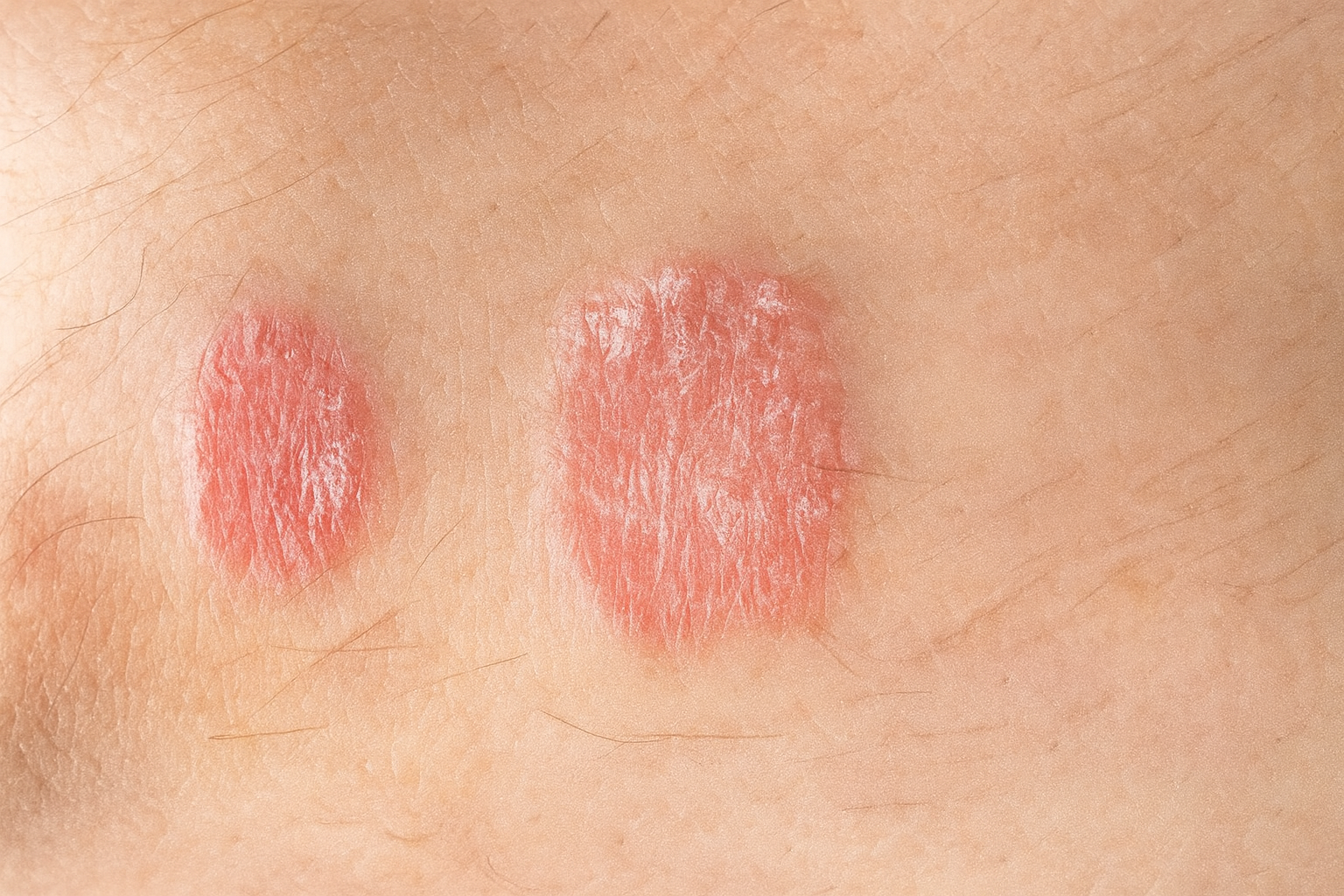
Psoriasis is not just a skin issue — it’s an autoimmune condition that causes rapid skin cell buildup, leading to red, scaly, itchy patches. Over 125 million people worldwide live with it.
There are five main types, each with different symptoms and challenges:
1. Plaque Psoriasis
The most common form.
Thick, itchy, scaly patches on elbows, knees, back, and scalp.
Often red or pink with a silvery scale.
2. Guttate Psoriasis
More common in children/young adults.
Triggered by infections like strep throat.
Shows as small, drop-shaped spots on the body.
3. Inverse Psoriasis
Found in skin folds — groin, under breasts, buttocks.
Smooth, shiny red patches that worsen with sweat or friction.
Often linked to fungal infections.
4. Pustular Psoriasis
Less common but severe.
White pus-filled blisters on red skin.
May be accompanied by fever and needs urgent medical care.
5. Erythrodermic Psoriasis
The rarest and most dangerous type.
Causes widespread redness, peeling, and pain.
Can be life-threatening and requires immediate treatment.
Psoriasis can also affect nails, causing thickening, pitting, or lifting — often an early sign of psoriatic arthritis.