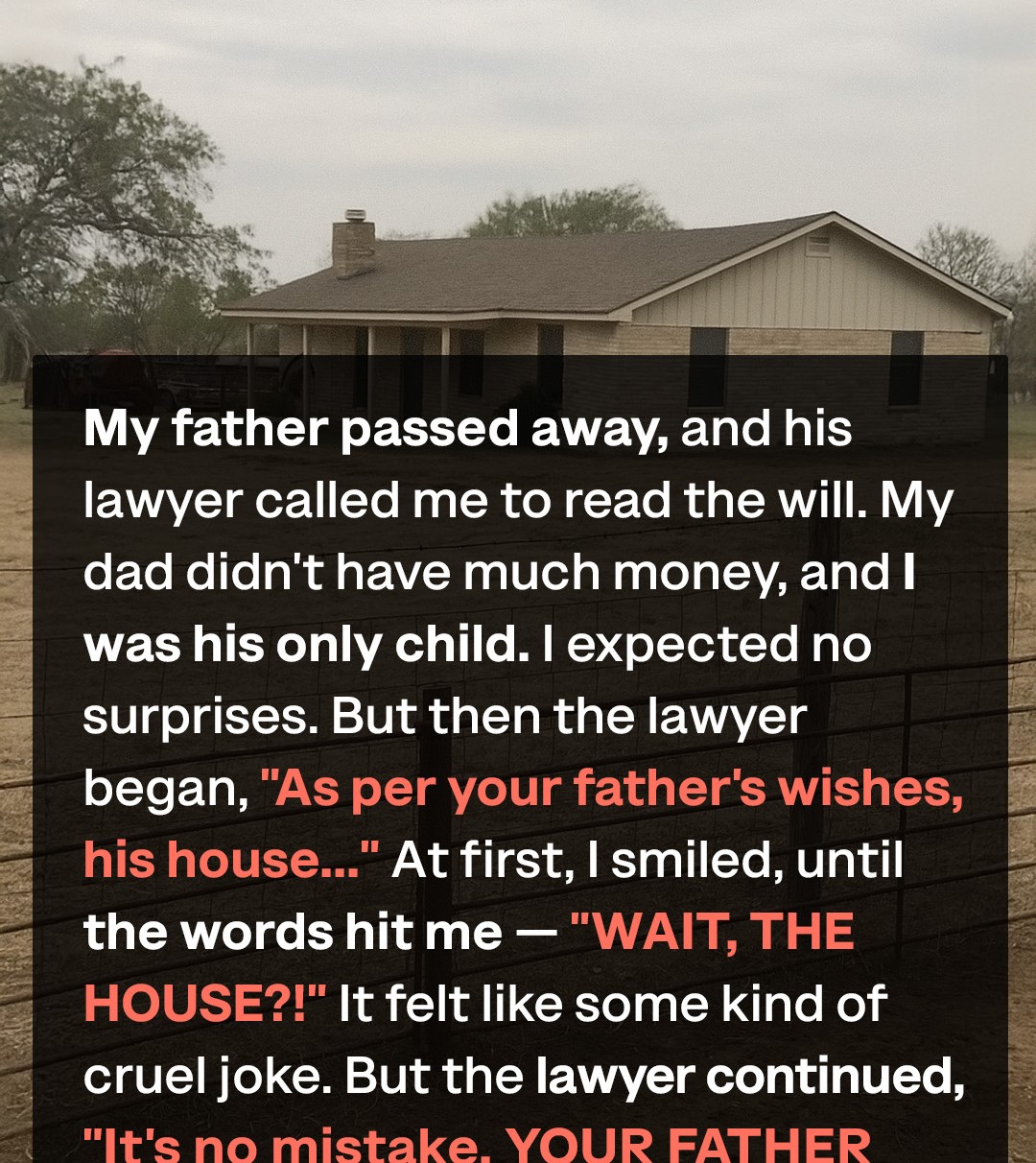
When my father passed away, I thought all he left behind were debts—until a notary revealed he owned another house. One I’d never heard of.
Curious and desperate, I went to the address. The house was charming but unsettling—and already occupied. An older woman, Deborah, answered the door, claiming she’d lived there for twenty years.
“This is my home,” I told her. “My father left it to me.”
She shot back, “He had no right. This house is mine.”
We were forced to share the space, each refusing to back down. She made it miserable—misplacing my things, sabotaging my routine. Still, behind her defiance, I saw something else: grief.
Then one morning, after a fight, she said something that stopped me cold.
“He took you and left me. He told you I was dead. But I’m your mother.”
She showed me a bracelet engraved with my name and birthdate. My world cracked open.
Deborah explained how she had left my father and me once, made mistakes, lost everything, and when she returned, the courts had sided with him. He never forgave her—but left her the house as a final gesture.
I was stunned. Everything I thought I knew about my family was a lie.
In court, Deborah won the legal rights to the house. I was prepared to walk away when she stopped me at the door.
“Don’t go,” she said. “I don’t want to lose you again.”
So I stayed.
We slowly rebuilt our relationship—mother and daughter, learning to forgive. And that house, once a battleground, became a home.