I turned an abandoned sunroom into a reading nook for my mother, but she never acknowledged it. My father only complained about the paint smell. I learned early that if I couldn’t earn their approval, I’d build something of my own.
I chose interior design. They called it a phase. I worked three jobs, paid my own way, and graduated with real offers—while my brother coasted through life, fully supported. When I finally told them I’d opened my own firm, my father dismissed it and tried to place me in a job through his connections. When I refused, he cut me off. My mother said nothing. I walked away at twenty-five.
The years after were brutal. Clients canceled. I slept in my office. I worked for free to build a portfolio. Slowly, it paid off. My work gained attention. I rebuilt an abandoned colonial home myself and turned it into both a residence and a symbol of everything I’d earned alone.
I built a chosen family—friends who showed up, celebrated me, and never asked me to prove my worth. For the first time, I felt grounded.
Then, nine years later, my mother called. My brother was getting married. Their venue fell through. They wanted my home.
Not an apology. Not reconciliation. Just entitlement.
They announced the wedding using my address without asking. Invitations went out. Vendors were booked. When I said no, pressure followed—calls, guilt, fake concern, even anonymous complaints against my business. They assumed I’d cave.
I didn’t.
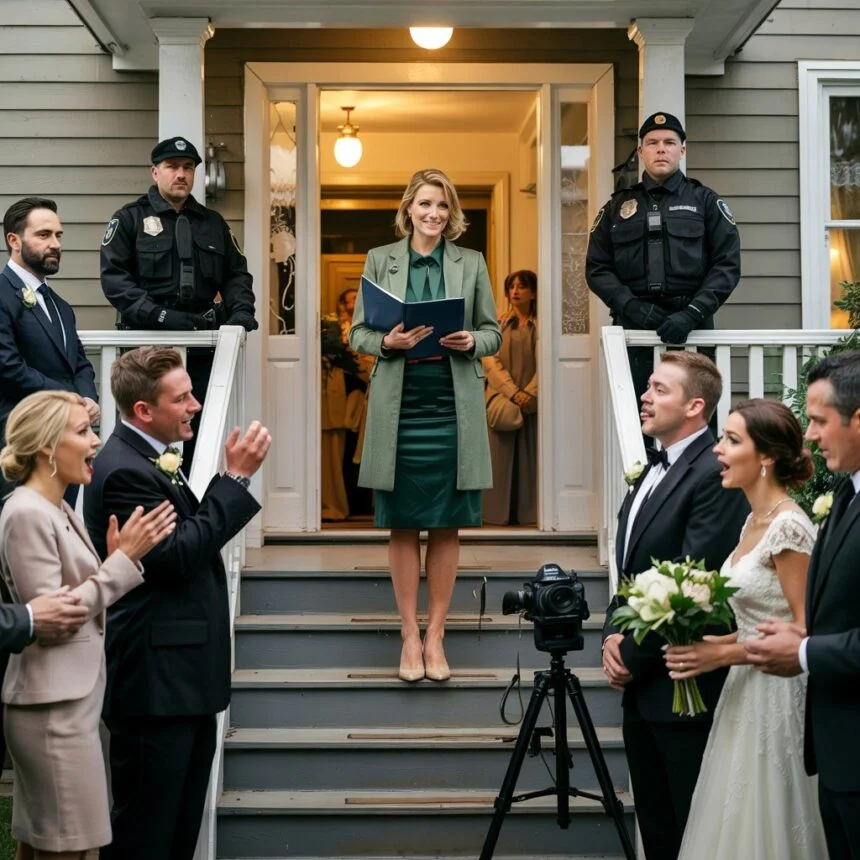
I hired a lawyer. Filed reports. Sent cease-and-desist letters. Hired security. Left town the weekend of the wedding.
They still showed up.
Guests. Vendors. My parents. My brother. All turned away at the gate.
Police enforced it. The wedding collapsed.
I didn’t feel joy—just certainty. I had finally stopped negotiating my boundaries.
Afterward, the accusations came. Then silence. Life went on.
Months later, I hosted Thanksgiving in that same house—with people who chose me. Friends. Laughter. Peace.
That night, as I stood in the home I built with my own hands, I realized something:
Family isn’t who raised you.
It’s who respects you.
Who doesn’t demand access.
Who shows up without conditions.
Closing that gate wasn’t bitterness.
It was freedom.