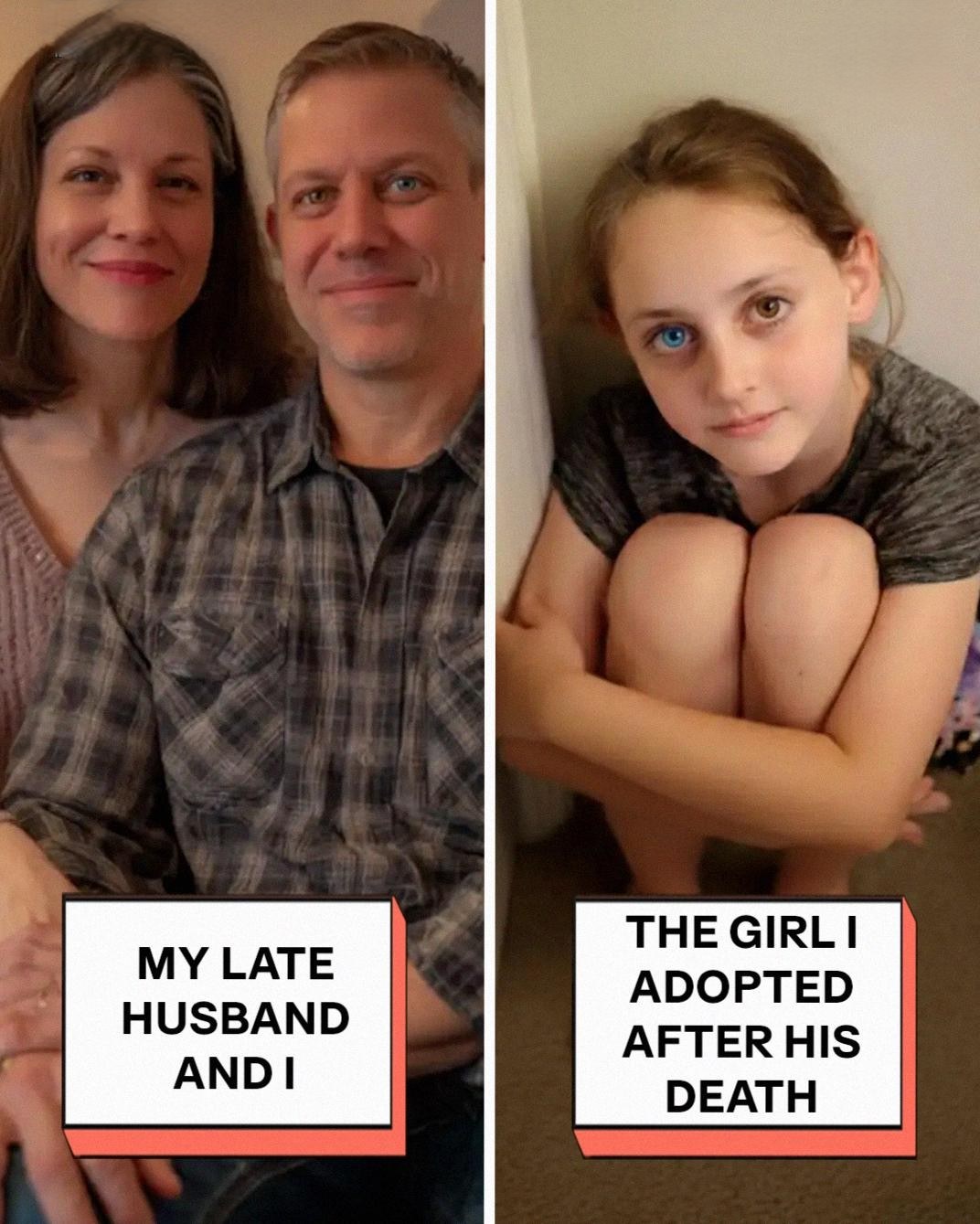
The steam from my coffee rose in thin, ghostly plumes, much like the memories of my husband, Dylan, that still haunted the walls of our home. Two years had passed since he passed out while tying his running shoes—a brutal, unexpected heart attack at the age of forty-two that stole our future. We had spent over a decade trying to conceive, undergoing a gauntlet of fertility procedures only to be informed I would never carry a child. Dylan had held me through that pain, promising we would adopt, but he died before we could ever start the paperwork. Standing before his casket, I had whispered a final vow: I will still be a mother. I would locate the child we were destined to have.
Three months later, I visited an adoption agency, bringing my mother-in-law, Eleanor, for support. I wasn’t a spiritual woman, but the instant I walked inside that institution, the air appeared to thin. Diane, a twelve-year-old girl, was sitting by herself in a corner. While the world normally neglected older children in favor of infants, I couldn’t turn away. When she glanced up, my heart stopped. She had Dylan’s eyes—a rare and remarkable incidence of heterochromia where one eye was hazel and the other a rich, dazzling blue. It seemed like a blessing from Dylan himself, a portent from the cosmos.
Eleanor, however, responded with incomprehensible fear. She tried to drag me out of the building, claiming the girl was “wrong,” while her face went completely white. I ignored her urgent warnings and her threats to ruin my home study. The connection I felt with Diane was too deep to ignore. Despite Eleanor’s attempts to have me declared mentally ill, I fought for six months until the adoption was finalized. Eleanor cut me off totally, leaving from our lives in a fit of mute wrath.
Diane moved in, and for the first time in years, the house felt alive. We developed a rhythm of laughter, shared meals, and gardening. Yet, she remained guarded about one thing: an old, battered rucksack she carried everywhere. She termed it her “private stuff,” and I respected her limits until curiosity and a mother’s instincts got the better of me. A year into our new existence, when cleaning her room, I discovered a concealed pocket in the lining of that bag. Inside was a crumpled Polaroid and a letter that turned my world to ice.
The snapshot featured a younger Dylan and Eleanor standing over a baby with those unmistakable, mismatched eyes. The note, scrawled in Eleanor’s jagged script, was an order to silence: “Diane, burn this. Dylan was your father. I’m your granny. You’ll ruin his memories if you tell Claire.
My palms shook with a chilly, vibrating rage. Using hair from Dylan’s old brush and a toothbrush that Diane had used, I started a private DNA test right away. When the results arrived, they verified a 99.9% paternal match. The truth was undeniable: Dylan had a daughter he never acknowledged, and Eleanor had spent years disguising her existence, even going so far as to put her own granddaughter into the foster care system to avoid a scandal.
I drove to Eleanor’s house, the note and photo held in my palm like a weapon. When she spotted me, she didn’t even try to lie. She acknowledged that Dylan had an affair thirteen years prior. Dylan had hoped to bring the toddler home and tell me the truth after the mother passed away in an automobile accident three years later. It was Eleanor who had misled him, convinced him that the confession would destroy our marriage. After offering to take care of the matter, she discreetly placed Diane for adoption in front of Dylan. She had lied to her son, telling him the girl had gone to a “good family,” while in truth, Diane had spent over a decade floating through the system.
Eleanor’s ultimate cruelty had occurred in the adoption agency. She had identified Diane quickly and handed her the photo and note, threatening the twelve-year-old that if she ever spoke the truth, I would despise her and send her back to the orphanage. In order to preserve her own reputation, she had turned a child’s fear of rejection into a weapon. I banned Eleanor from our life permanently, appalled by the idea that she had put social position over her own flesh and blood.
When I arrived home, Diane was waiting, her eyes red from sobbing. She revealed that she had lived in fear every day, gazing at Dylan’s images on our walls and wondering whether I would throw her away if I knew she was a living reminder of his betrayal. I drew her into a long overdue embrace, promising her that nothing—not even the convoluted ghost of her father—could ever change the reality that she was my daughter.
The following morning, we headed to the cemetery. It was a strange, heavy pilgrimage. I told Dylan I was upset as I stood in front of his headstone. I was enraged that he hadn’t trusted me with the truth, and I was heartbroken for the years Diane had lost. But when I gazed at her, I realized that despite the lies and the manipulation, the cosmos had brought us together. She was the piece of him I had always wished for, even if she arrived under circumstances I never could have imagined. We left the cemetery hand in hand, leaving the secrets in the grave, finally ready to establish a future based on the truth.
Statistically, the adoption of older children remains a challenge in the United States. In 2022, there were around 391,000 children in the foster care system. Of those waiting for adoption, the average age is 7.7 years old. Children aged 11 and older comprise a major share of the “waiting” population but are adopted at lower rates than infants and toddlers. In particular, children older than 12 make up barely 10% of foster adoptions. These numbers highlight the system in which older children frequently “age out” without finding a permanent home, which Diane had to deal with before our paths intersected. The link that Diane and I created out of the rubble of our pasts was more important to us than the numbers. We weren’t just a case study in adoption; we were a family characterized not by kinship or betrayal, but by the choice to stay.