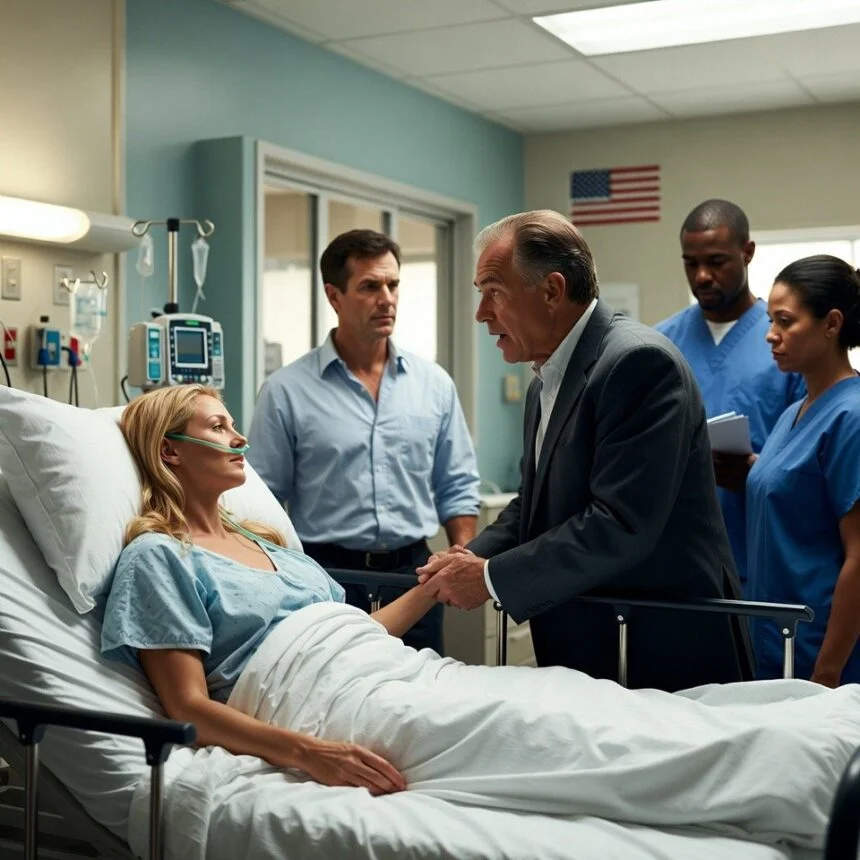
The night of my accident, I lay unconscious in the ICU while my father stood under fluorescent lights asking only one thing: how much it would cost to save me. When doctors said I needed another surgery, he signed a Do Not Resuscitate order at 11:18 p.m., telling them, “Let her go. We’re not paying for this.”
I survived because a nurse found the healthcare proxy I’d filled out years earlier naming my best friend, Deborah. She revoked the DNR and approved the surgery. My father had already gone home.
I’ve spent my life feeling like a debt. Born with a heart defect, I grew up hearing how much my surgery “cost the family.” I paid my own way through school while my sister was supported. The only person who never treated me like a bill was my grandmother, Lillian. Before she died, she quietly arranged for her house and a small trust to go to me alone.
While I was in a coma, my father forged a power of attorney, transferred her house into his name, and took out a $280,000 mortgage against it. When I woke up, I learned everything. With the help of my grandmother’s attorney, I filed to void the deed and reported the fraud.
At church, where my father publicly claimed he’d been praying at my bedside, I told the truth instead—about the DNR, the forgery, and the money. His reputation collapsed. The court voided the transfer and ordered restitution. He avoided jail but lost his position and much of his standing.
In therapy, I realized I’d spent my life repaying a debt that was never mine. My first boundary was simple: I blocked his number.
I kept my grandmother’s house. I went back to work as a nurse. And I learned this: you don’t owe anyone your health, your home, or your life. If someone keeps tallying what you “cost,” that isn’t love.
Sometimes the most powerful signature isn’t the one that harms you—it’s the one you write to protect yourself.