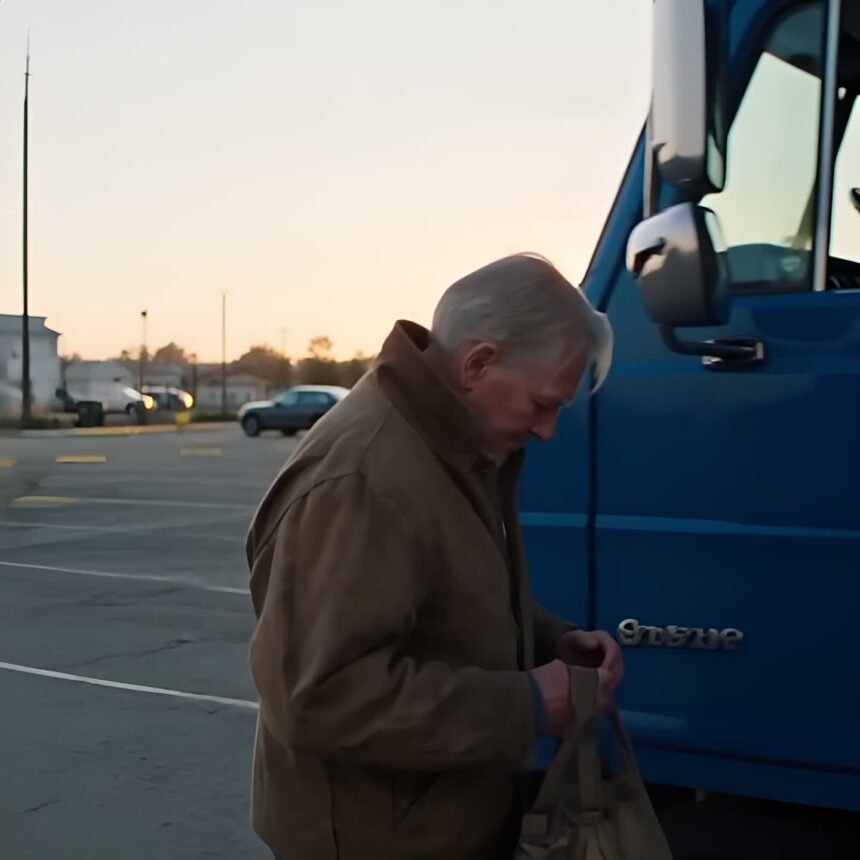
When a flood destroyed my home in Clarksville, Tennessee, I showed up at my son Jordan’s house with nothing. He refused to let me in, telling me at 67 I needed to “handle my own problems.”
I found a night janitor job and a tiny studio apartment. A truck driver named Henry began giving me rides home after my shifts. We became friends—two widowers starting over.
Then my job applications started getting rejected. Employers said I had “reliability issues” and a drinking problem. I don’t drink. I confronted Jordan. He admitted sabotaging me, calling it “tough love.”
Soon after, Henry recorded Jordan meeting with two men, calmly discussing how my death—and Henry’s—could be made to look like a robbery. We realized Jordan was protecting something.
We followed him to a storage unit and broke in. Inside, we found the truth: after my wife Patricia died, Jordan had tricked me into signing a forged waiver, stealing $2.1 million from her estate. He’d told me there was nothing left.
I confronted him and gave him 48 hours to return it. Instead, he threatened me.
We went to the FBI.
Jordan was arrested, convicted of fraud, forgery, and conspiracy, and sentenced to ten years in federal prison. Full restitution was ordered.
With the recovered money, Henry and I bought land in Tennessee. We built a home, a workshop, and a quiet life. Years later, Jordan wrote from prison admitting what he’d done. I’m not sure forgiveness will ever come—but I left the door slightly open.
I lost a son to greed.
But I gained a brother in Henry.
I learned that family isn’t about blood—it’s about who shows up when everything falls apart.
In the end, I found something I thought I’d lost forever:
Home.