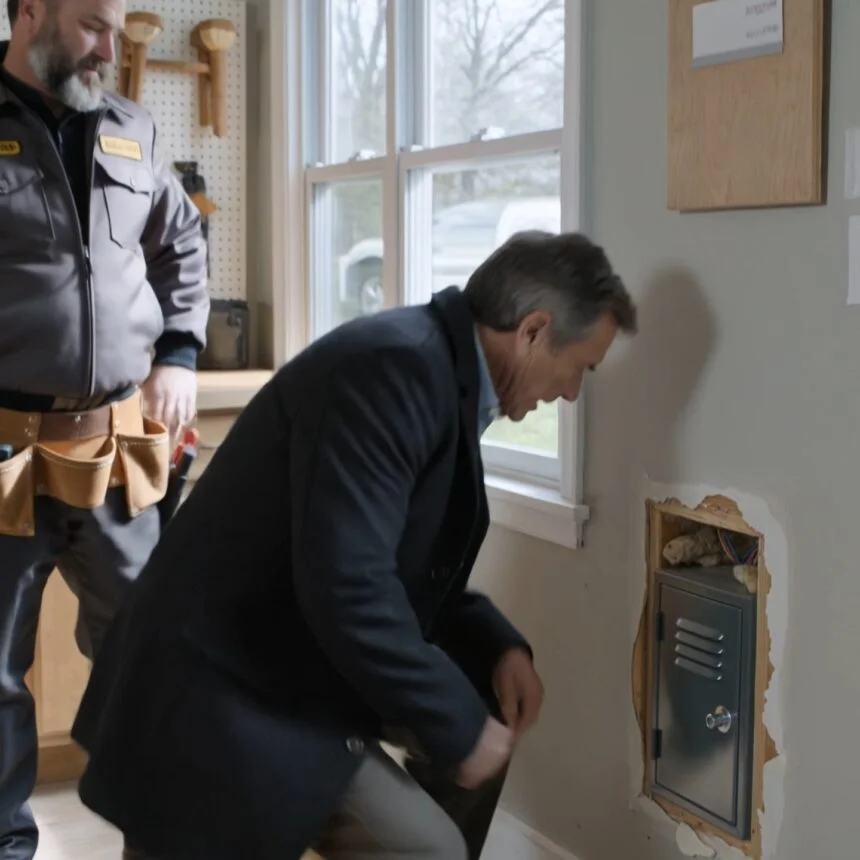
I almost let the call go to voicemail, but something made me answer. It was Terry Kowalski, the electrician rewiring Diane’s workshop. “You should come alone,” he said, his tone careful, almost reverent. My stomach dropped.
The workshop had been Diane’s sanctuary—her tools, aprons, and projects untouched after her death. Terry had cut into the north wall and found a small gray lockbox, deliberately placed between the studs. Inside were a USB drive, a notebook, and an envelope with my name in Diane’s handwriting.
The notebook detailed Diane’s careful investigation into suspicious withdrawals from our accounts, totaling nearly ninety thousand dollars. She documented everything meticulously: dates, amounts, conversations with our financial adviser, and even her own health concerns from a wellness supplement she suspected was harmful. Her notes revealed worry, restraint, and determination to gather proof before accusing anyone—including me.
Renata and I examined the box and the drive together. Audio recordings confirmed Diane had confronted the adviser, Clifton Ralph, who tried to dismiss her concerns and manipulate her. She had hidden the remaining capsules, warning me not to confront him alone.
Following her instructions, I contacted Margaret Oakes, a trusted lawyer, who guided us through reporting the fraud safely. Investigators confirmed the capsules contained a cardiac compound, and Clifton Ralph was arrested.
Weeks later, a pattern emerged: deposits had gone to Patrick Delaney, Diane’s younger brother, likely tipped off by him. The betrayal stung—grief compounded by humiliation. Diane had known, had protected me, had waited for proof.
In her careful, deliberate way, even in death, Diane had shielded me while uncovering the truth. I was left with the notebook, the drive, the blue tin, and the weight of her foresight.