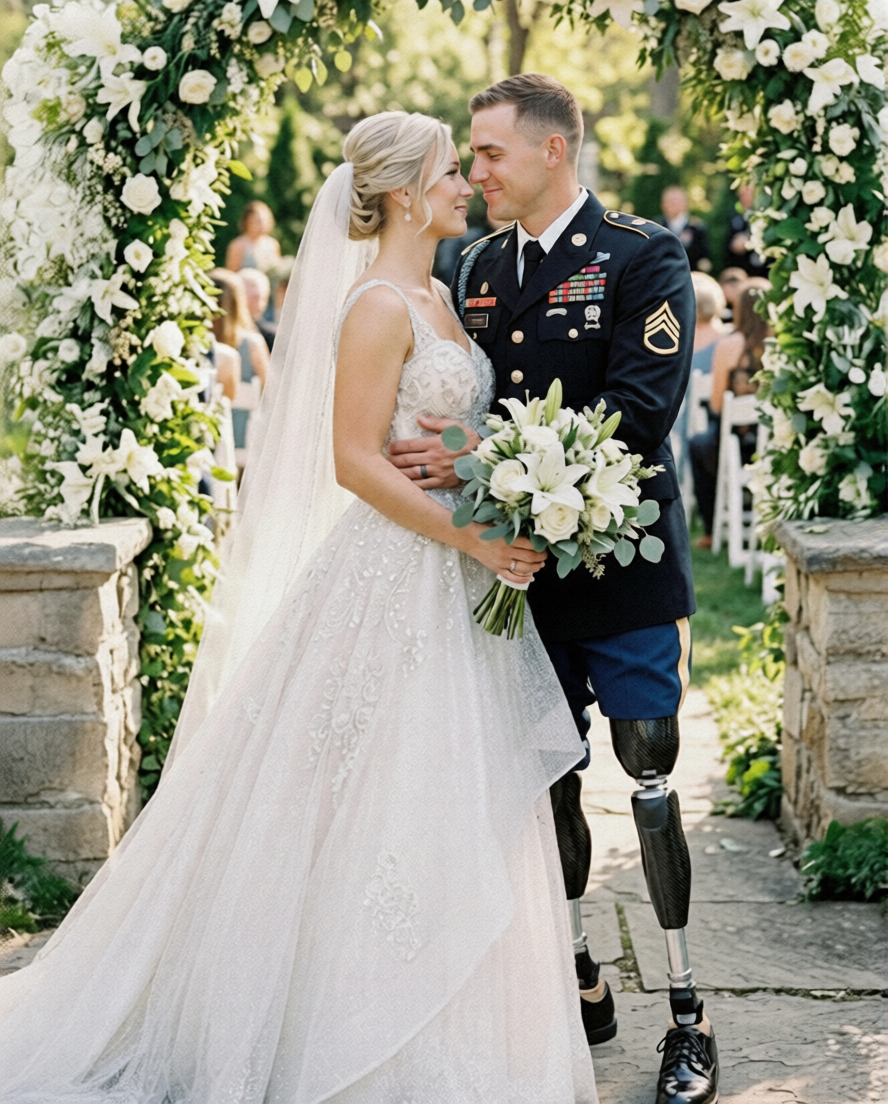
I thought I knew what I was marrying into with Rowan. But a week after our wedding, a locked door and his secret struggle showed me what love really looks like when no one else is watching.
When people ask how I met Rowan, I say, “He made me laugh on the worst day of my life.” What I don’t say is that it was the day my father died. He rolled up in his wheelchair, handed me a coffee, and said, “You looked like you needed it more than me.”
Rowan lost both legs in a military explosion. He’s stubborn, independent, and never asks for help. My mom worried before our wedding, but I knew I wanted a marriage with Rowan, not a performance.
The wedding was a blur—rain, nerves, medals on his uniform, and messy, honest vows. He promised coffee every morning; I promised fierce love. Life afterward was simple joy—pancakes, movie nights, small routines.
Then, a week later, something changed. Rowan started locking doors, withdrawing, and snapping—things he never did before. One afternoon, when I came home with my mom, I heard heavy thuds and dragging from the bedroom. Behind the locked door, Rowan struggled with his prosthetics, hurt but determined.
I opened the door to find him gripping the bedframe, sweating and trembling. He whispered, “This is what your life will look like. Struggle, pain, always picking up the pieces.”
I told him, “No, this is what it looks like to fight for someone you love. You are enough.” He wanted me to have a perfect first dance; I wanted him to know he already was enough.
We worked together—slow, careful practice with his prosthetics. Weeks later, at our reception, Rowan stood in front of everyone. With my hand in his, we moved together, step by step. People clapped. My mom cried.
Later, in our wrinkled wedding clothes, he asked, “Still happy you married me?” I laughed, “Ask me every day after that.”
In the months that followed, we learned that love isn’t about what’s missing—it’s about showing up, even when it hurts. He did. I did. And that was enough.