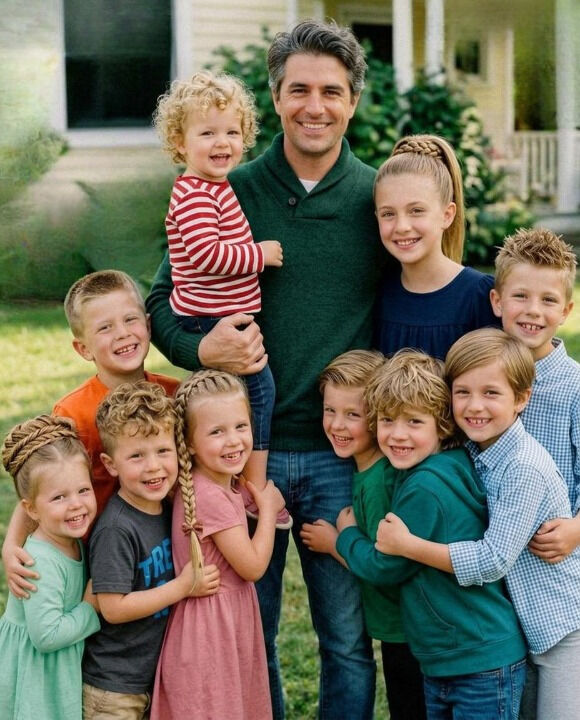
For seven years, I believed grief was the hardest thing my family had survived.
After my fiancée Calla disappeared and was presumed dead, I was left raising her ten children alone. Life became constant chaos—school runs, arguments, and exhaustion—but it was the only life we knew.
People said I should let the children go, that raising ten kids wasn’t possible. But I refused to split them apart. I stayed, learning everything about caring for them, determined to give them stability after losing their mother.
Then, seven years later, my oldest daughter, Mara, asked to talk. That night, she revealed the truth.
Calla hadn’t drowned or vanished. She had staged her disappearance, walked away from her life, and told Mara to stay silent. She left behind debt, responsibility, and ten children she claimed would be “better off” without her.
Mara had carried that secret alone for years.
The shock wasn’t just that Calla left—it was that she made a child carry the truth.
Then Mara showed me proof: Calla had recently contacted her, resurfacing after years with an apology and a new life.
I went to a lawyer immediately and secured legal control to protect the children and block direct contact.
When I later met Calla, she tried to justify leaving, saying she thought it was for the best. I told her plainly that abandonment is not sacrifice—and using Mara was unforgivable.
Back home, I told the children the truth. There was silence, anger, confusion—but then they turned to Mara, not against her. They stayed united.
In the end, I made sure of one thing: Calla may have given them life, but I was the one who showed up for it—and that’s what made us a family.