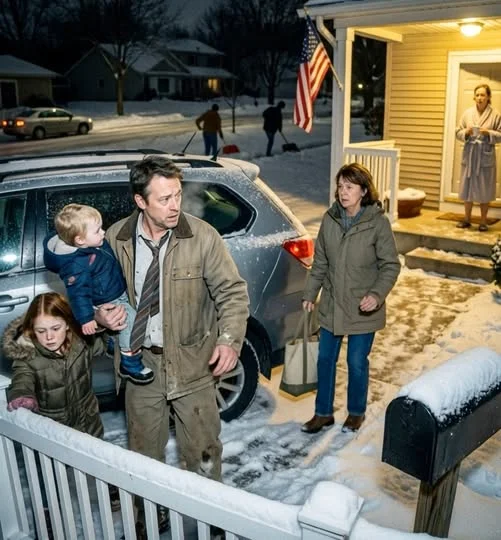
I came in through the garage out of habit, expecting a normal, quiet night. But the house felt wrong—too silent, too controlled. No TV, no dishes, no family noise. Then I heard a faint scraping sound from the hallway.
In the shadows near the pantry, I found my seven-year-old daughter Mara on the floor, dragging her baby brother Liam with a bathrobe belt tied around her waist. He was feverish, weak, and barely responsive. Mara looked terrified but focused—like she had been carefully trying to save him.
Before she could explain, I understood something was deeply wrong. She whispered that Sabrina had locked Liam in the pantry because he wouldn’t stop crying, and she had been forced to rescue him in silence, afraid of punishment if she made noise.
My wife Sabrina appeared downstairs calm and composed, dismissing everything as “overreacting” and calling the children difficult. But Mara’s fear and Liam’s condition told a different truth.
I told Mara to go to the living room and assured her she wasn’t in trouble. That moment made something clear: my daughter had been protecting her brother alone.
Sabrina tried to control the narrative, insisting I was overreacting, but I realized the truth—I had been absent, and Mara had been surviving under fear, not discipline.
I took Liam to urgent care. A nurse confirmed dehydration, fever, and neglect. A social worker became involved, and I admitted what had happened. My wife had locked my son in a pantry as punishment.
That night, Ruth, our neighbor, stayed with Mara while I handled the hospital. Sabrina was told she couldn’t be alone with the children.
Over the following weeks, everything changed. Doctors, therapists, and social workers helped us rebuild. Mara had been living in constant fear, learning to stay invisible to avoid punishment. Slowly, she began to unlearn that.
At home, small moments of safety returned—accidents no longer led to fear, silence no longer meant danger. Ruth guided us through recovery, teaching us how to function as a safe family again.
Mara and I started a “good jar,” writing down small daily positives. At first it was simple things: laughter, meals, being together without fear. Over time, it became proof that life was changing.
Sabrina eventually left, and the house grew quieter—but in a healthy way. Not silence from fear, but peace.
Months later, we planted tulip bulbs in the backyard. Ruth said they bloom after winter, even when nothing is visible. Mara watched them grow like miracles when spring arrived.
“I’m glad you came home early that night,” she said once.
I told her I wished I had come home sooner. But she shook her head: “You came home when it mattered.”
Our house wasn’t perfect. But it was safe now—filled with noise, life, mistakes, and laughter. And every day, we added another slip to the good jar.
One good thing. Every day.
And slowly, we learned that even after the hardest winter, life still blooms.