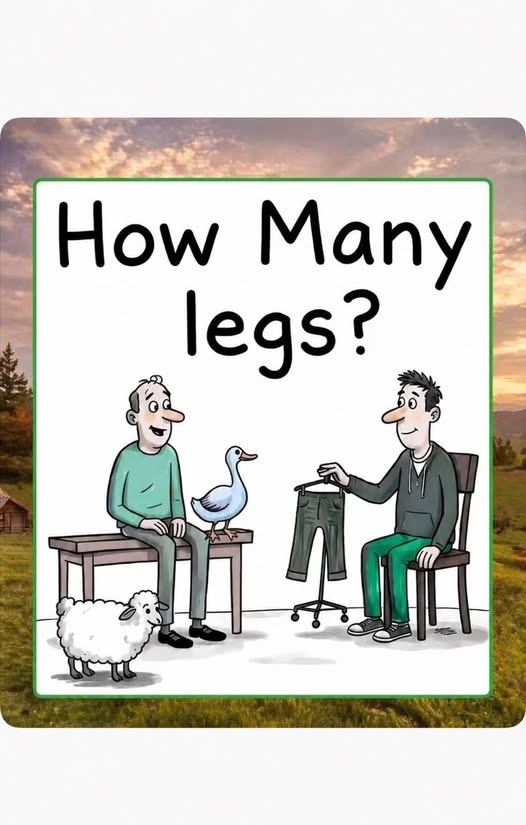
At first glance, this looks like a simple, almost playful scene: two men sitting, a duck, a sheep, and a pair of pants hanging nearby. Nothing unusual.
Then comes the question: “How many legs?”
Your brain immediately starts counting:
- 2 men = 4 legs
- 1 duck = 2 legs
- 1 sheep = 4 legs
Total so far: 10 legs
But here’s where the trick appears.
You look again and notice the hanging pants. Many people try to add them as if they count—but they don’t.
Pants aren’t alive. They don’t have legs, only openings for them.
That’s the entire trap: the puzzle tests attention, not math. It’s designed to make you include things that only look relevant.
So the corrected count is:
- Men = 4
- Duck = 2
- Sheep = 4
- Pants = 0
Final answer: 10 legs