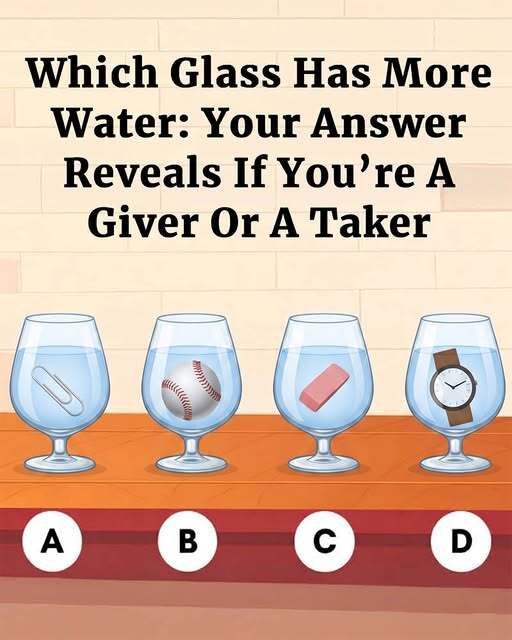
Look at the four glasses labeled A, B, C, and D. They all appear filled to the same level but contain different objects: a paperclip, baseball, eraser, and wristwatch.
At first glance, it seems like a trick question—but it’s simple physics.
When an object is placed in water, it displaces some of it. Larger objects take up more space, meaning less water can fit in the glass.
So the glass with the smallest object actually holds the most water:
- A: paperclip (smallest) → most water
- B: baseball (largest) → least water
- C: eraser (medium)
- D: watch (medium-large)
Correct answer: Glass A holds the most water.
But the real point isn’t just physics—it’s perception. People often judge quickly based on appearance, which can reveal thinking habits.
What your choice may suggest (for reflection only):
- A (paperclip): detail-focused, observant
- B (baseball): quick, intuitive decisions
- C (eraser): balanced, adaptable thinker
- D (watch): analytical, detail-heavy thinker
This is not a scientific personality test—just a reflection exercise.
The takeaway: we often miss the real answer by focusing on what stands out first, while the smallest detail can matter most.