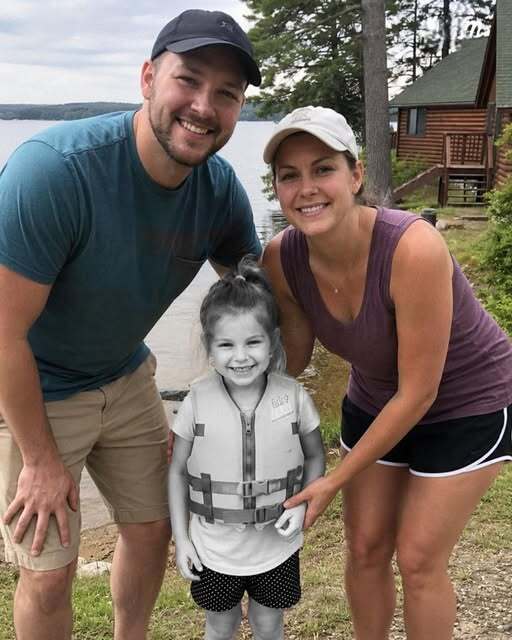
A parent’s grief after losing a child feels like a slow fire that never stops burning. My five-year-old daughter Iris disappeared during a family camping trip four years ago. The official story said she wandered off into the woods and got lost. I couldn’t accept it, but the case was closed, and my marriage to Luke fell apart under the weight of it all. The only person who seemed deeply affected was our nephew, Liam, who fell into silence and was later diagnosed with trauma.
On what would have been Iris’s ninth birthday, everything changed. Ten-year-old Liam finally spoke again and told me, terrified, that he knew what really happened. He said he had been forced to stay quiet for years, warned that telling the truth would destroy the family and make him responsible.
Shaken, I called Luke. Without hesitation, he came with me, and we drove to his brother’s house. When we forced our way inside, we discovered a hidden room disguised as a medical setup. Inside, hooked to machines and alive but unresponsive, was Iris.
Luke’s brother and his wife admitted the truth: Iris hadn’t gotten lost—she had been injured near the woods after being pushed during a child’s argument. Instead of calling for help, they covered it up. The brother, a doctor, secretly brought her home and kept her alive in hiding while everyone else believed she was dead.
They had let us bury an empty loss while keeping our daughter hidden in plain sight.
Authorities were called immediately. Iris was taken to a pediatric care facility, and the people responsible were arrested and charged. Liam is finally recovering from the burden of the secret he was forced to carry.
Now, after four years of grief, Luke and I sit by Iris’s bedside every day. She is still fighting, still unresponsive—but she is alive. And for the first time since she disappeared, I am speaking to my daughter again instead of speaking only to silence.