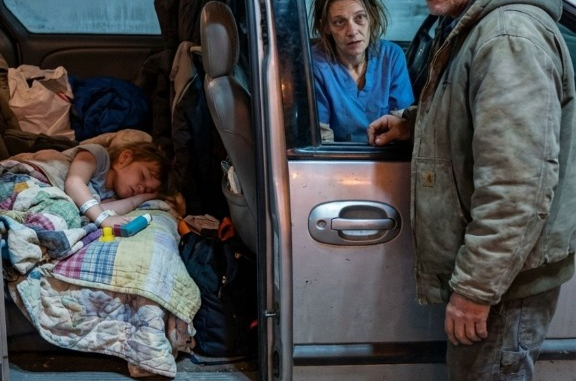
After discovering Elena’s daughter sleeping in a freezing van, a warehouse manager reversed Elena’s firing and helped her stay afloat. But soon, corporate leaders arrived accusing him of favoritism, policy violations, and turning the workplace into “a charity.” They argued managers couldn’t decide whose hardship deserved help.
As tension spread through the warehouse, employees began revealing their own hidden struggles—sleeping in trucks, skipping medication, caring for sick relatives, balancing impossible responsibilities. The manager realized how many people had silently suffered under rigid rules he once enforced without question.
When a brutal snowstorm hit, he chose compassion over policy. He opened the training room as a safe shelter, allowed flexible attendance, and focused on keeping workers alive rather than punishing them for emergencies. Corporate warned him his career was at risk, but workers slowly came together to support one another.
Despite fears, the team successfully completed a critical shipment while caring for employees and their families during the storm. Afterwards, leadership tried placing the manager on leave, but workers stepped forward to defend what had happened. They argued that workplaces needed systems that recognized real human struggles instead of pretending personal lives stopped at the time clock.
In the end, leadership approved a trial hardship-support program with oversight. The experience changed the warehouse culture completely. Employees still worked hard, but now there was understanding alongside the rules.
Later, a simple sign appeared beneath the attendance board:
“Before you write someone up, ask what’s going on.”