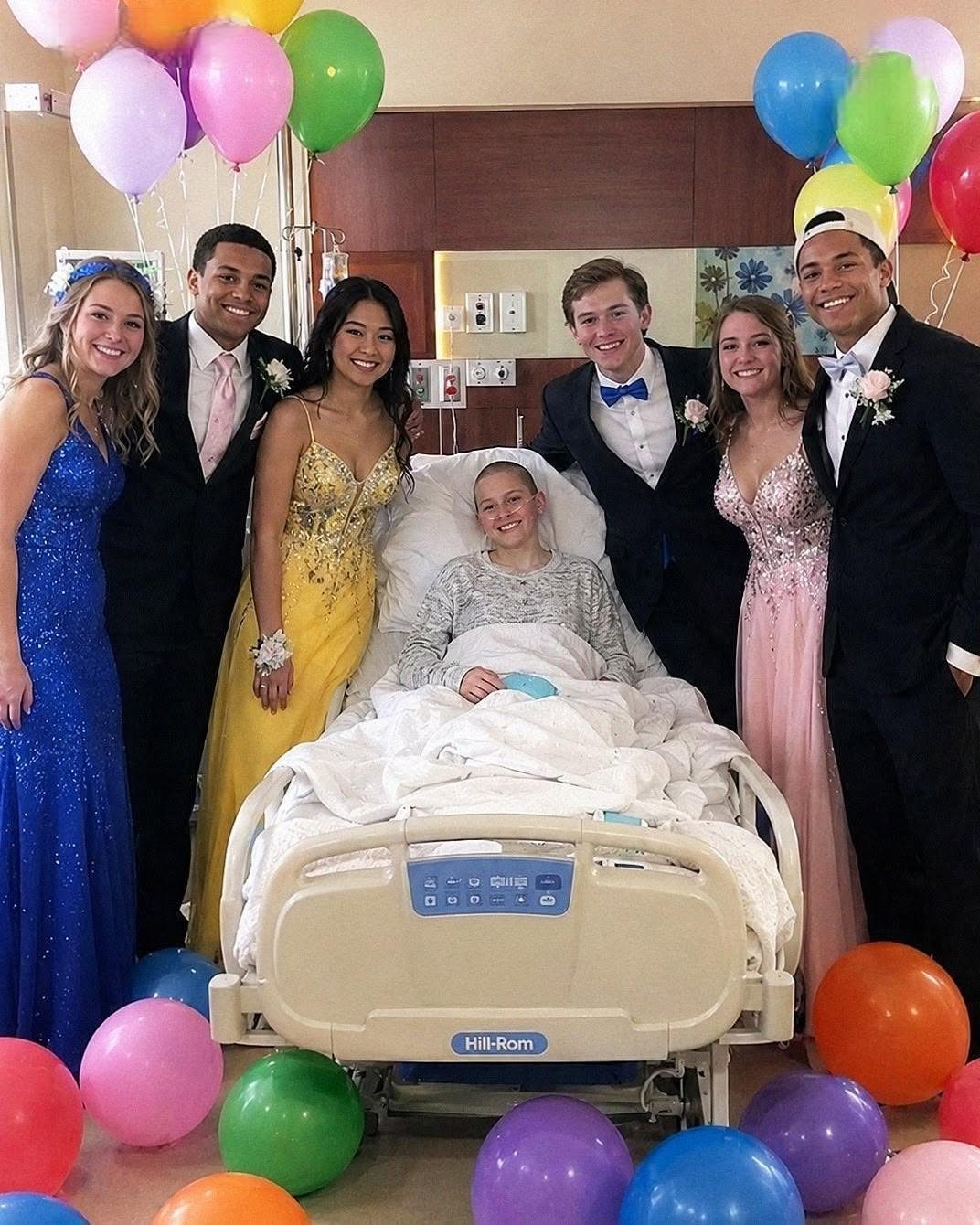
The hospital room felt like a cold cage, filled with machines and the heavy reality of my 17-year-old daughter Carol’s battle with leukemia. For six months, I clung to false hope, hiding the truth from her while she slowly weakened. She still dreamed of her prom, something she had planned since childhood, and I kept reassuring her it would still happen.
Two days before the event, her condition worsened and she was hospitalized indefinitely. That night, I noticed she had been writing letters to her friends. On prom night, I was shocked when her classmates arrived at the hospital, dressed up with music and food—they had organized a surprise prom for her with the doctors’ permission.
For the first time in months, Carol laughed and felt alive again. But outside the room, her best friend Daryl handed me an envelope. Inside were letters from Carol revealing she had overheard doctors weeks earlier and knew her condition was terminal. She had planned the prom herself with her friends, wanting one last happy memory for everyone instead of endless sorrow.
The realization broke me. Carol hadn’t been in the dark—she had been protecting me, choosing joy over fear for my sake. When I returned to her, we shared a quiet understanding. No more pretending.
That night, we danced in her hospital room surrounded by her friends, sharing a final moment of honesty and love. In the weeks after, her condition briefly stabilized—not a cure, but time. What she left behind wasn’t just sadness, but a powerful lesson: even in the darkest moments, truth and love matter more than false hope.