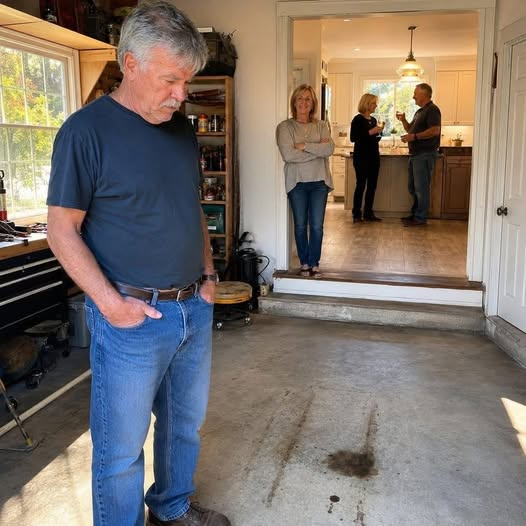
The moment my wife admitted what she had done, I knew something far bigger than a motorcycle had been taken from me.
“I sold it this morning.”
Six words.
That was all it took.
My father’s motorcycle wasn’t just a machine sitting in a garage. It was the last connection I had to him—a promise, a memory, a piece of my past I had protected for decades.
But to her, it was just clutter.
A problem solved.
A way to fund renovations.
At first, I tried to believe it was a mistake. A misunderstanding. Something that could be undone.
But it wasn’t.
The forged signature. The secret buyer. The money already transferred.
It was deliberate.
And in that moment, I understood something painful: this wasn’t just about the motorcycle. It was about years of being unheard, dismissed, and quietly overridden in my own life.
The sale didn’t create the problem.
It revealed it.
For years, I had stayed quiet. Chosen peace over confrontation. Told myself compromise was the same as understanding.
That illusion ended the moment the police got involved.
Recovering the motorcycle wasn’t about revenge.
It was about boundaries.
About refusing to let someone erase a part of my life without consequence.
Eventually, the bike was returned.
But something else came back with it.
My voice.
The divorce followed not long after, and surprisingly, so did peace.
Life became simpler without constant friction. I found myself surrounded by people who understood why certain objects carry memory, meaning, and identity far beyond their price.
Among fellow riders, no one laughed. No one dismissed it. They understood without explanation.
Then I met Eleanor.
She never asked what the motorcycle was worth.
Instead, she asked, “What was your father like?”
And in that moment, I realized what I had been missing all along.
Not validation.
Not agreement.
Just understanding.
Because sometimes the deepest loss isn’t what someone takes from you.
It’s realizing they never truly saw you.
And sometimes the life you rebuild afterward is the first one where you finally feel seen.