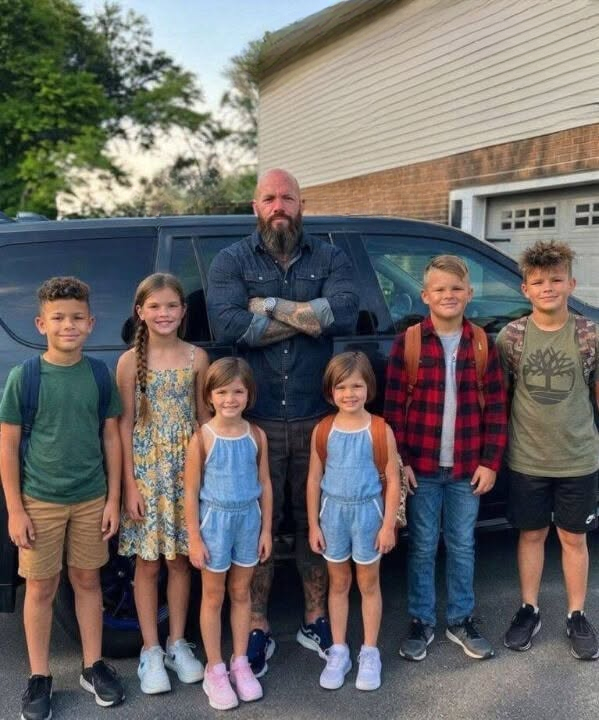
When David collapsed behind the fence, his seven children immediately knew what to do.
One called emergency services. Another grabbed the medical kit. Someone unlocked the gate while the youngest children stayed exactly where they had been taught.
There was no panic.
The paramedics later discovered that David had advanced pancreatic cancer. His strict routines, chores, notebooks, and emergency drills suddenly made sense.
He wasn’t trying to control his children.
He was preparing them for a life without him.
David had spent nine months teaching them everything from cooking and finances to emergency procedures and household repairs. His notebook contained one heartbreaking entry:
“Ben asked who would tuck him into bed. No answer.”
The final page said:
“The goal isn’t to make them depend on me forever. It’s to make sure they can survive when I’m no longer here.”
But I told David there was one thing he hadn’t taught them—who to turn to when they were lonely.
So the neighborhood stepped in.
A nurse helped with medical care. A mechanic taught the older children repairs. A retired accountant taught them about money. Neighbors brought meals and helped with schoolwork.
Then winter came, and David grew weaker.
Eventually, he passed away.
At his funeral, the entire neighborhood realized how badly they had misunderstood him.
That evening, the seven children stood silently around his empty chair.
Ben whispered, “Who blows the whistle now?”
Emma took their father’s silver whistle from his jacket and blew one short note.
The children turned toward her.
Not because they were afraid.
Because they trusted her.
And without being told, they began preparing dinner together.
David had succeeded.
He hadn’t taught his children to live without love.
He had taught them how to carry his love forward after he was gone.