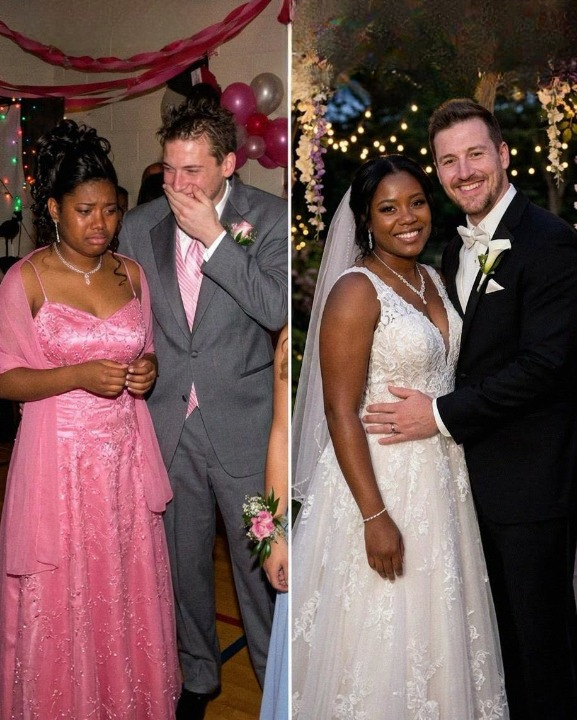
I married Ryan, the boy who had made my high school years miserable, because I believed he had truly changed.
For years, he had humiliated me with a cruel nickname: “Whispers.” But when we met again as adults, he apologized sincerely. He had been through therapy, stayed sober, and devoted himself to helping teenagers.
Slowly, I fell in love with the man he had become.
On our wedding night, however, Ryan finally told me the truth.
He admitted that years ago, he had witnessed the incident that started the rumors about me. Instead of protecting me, he joined in and helped turn my pain into a joke because he was afraid of becoming a target himself.
“I hate who I was,” he said.
But there was more.
Ryan had written a memoir about his past and his guilt. Although he changed my name and removed identifying details, he had never asked my permission to use my story.
That hurt almost as much as what he had done in high school.
“I didn’t agree to be your lesson,” I told him.
Ryan insisted that his love for me was real, but I realized something important: forgiveness didn’t mean I had to accept everything he did.
That night, I chose to sleep in the guest room.
For the first time, I wasn’t afraid of being alone.
I was finally listening to my own voice.