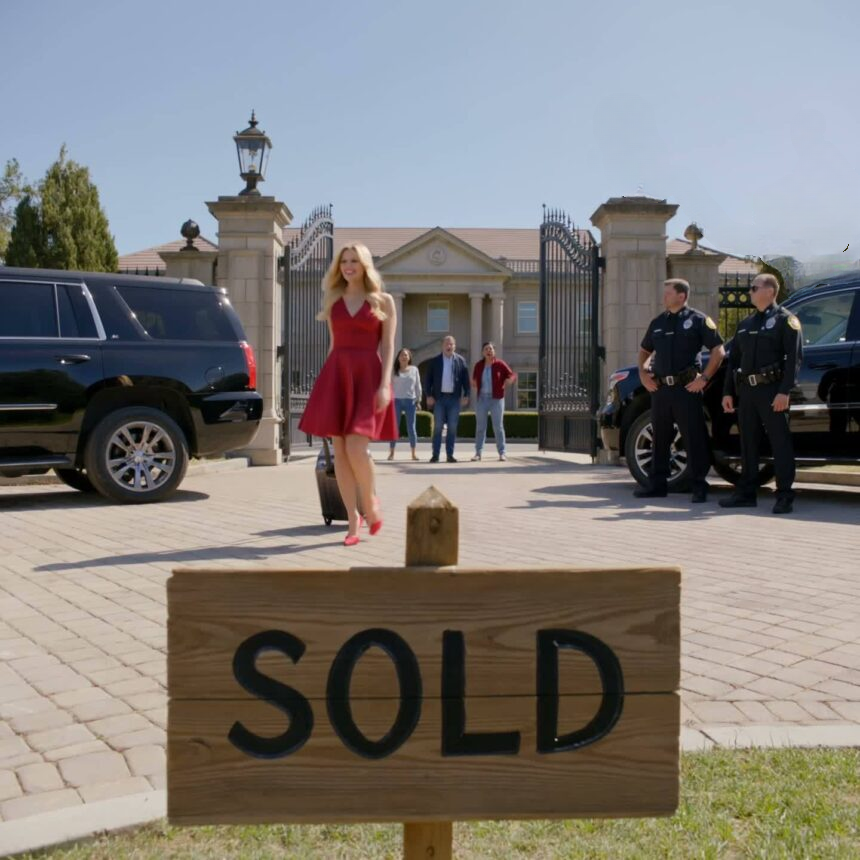
The name on the business card was Richard Vance, the billionaire CEO of Vance & Associates—my sister Victoria’s employer.
Grandma’s letter explained that she had known him for years and had once helped him through a difficult situation. In return, he had promised to protect her family if she ever needed him.
Now I understood why Grandma had told me not to let them take her house.
I called Vance.
After hearing everything—the pressure to sell the $750,000 house for $250,000, my father’s threats, and Victoria’s suspicious use of confidential company information—he agreed to meet me.
The next morning, I sat across from him in his office.
“Your grandmother was a remarkable woman,” he said. “And I owe her a debt. Let me look into this.”
He did exactly that.
An internal investigation at Vance & Associates uncovered serious questions about Victoria’s use of confidential information. Her plans began collapsing almost immediately.
At the same time, Vance’s legal team helped protect my ownership of Grandma’s house. Historic-preservation restrictions and structural issues made Victoria’s development plans impossible.
The house was safe.
My family had spent weeks trying to convince me that I was too insignificant to deserve it.
They had mistaken kindness for weakness.
Standing beneath Grandma’s old stained-glass window, I finally understood what she had meant:
Quiet strength doesn’t need to announce itself. It simply acts when the moment comes.
Victoria lost the future she had tried to steal.
My parents stopped threatening me.
And for the first time, I stood inside Grandma’s house knowing it was truly mine—not because I had fought for it loudly, but because the woman who knew me best had trusted me to protect what she left behind.