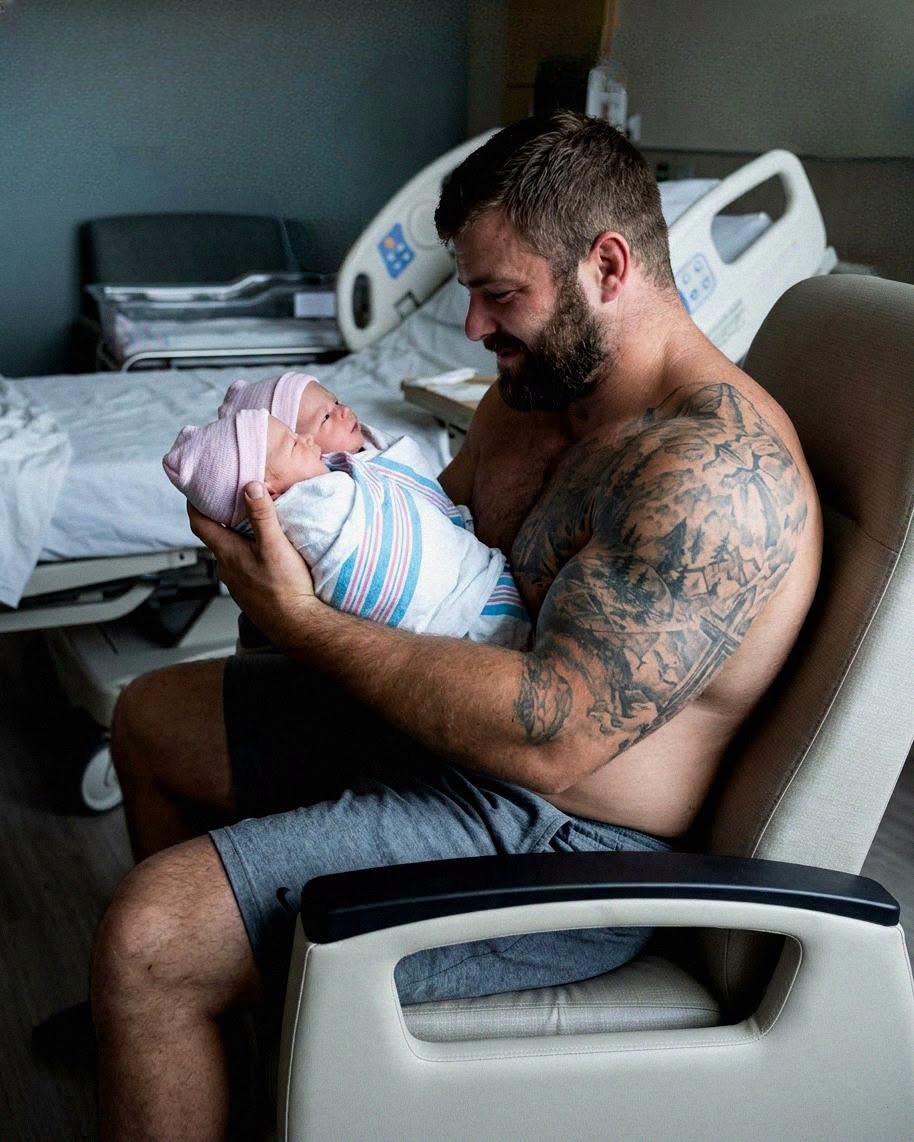
For 18 years, my husband and I hid the truth about our daughter’s twin sister, Rosie, who died just nine days after birth. I convinced myself I was protecting Hannah. Then, on her eighteenth birthday, my husband brought a wooden chest out of the garage and changed everything.
Rosie was born eleven minutes after Hannah. After her death from SIDS, I dismantled her crib because I couldn’t bear to look at it. David grieved quietly, spending an hour alone in the garage every September 9th—Hannah’s birthday and the day we also remembered Rosie.
Our family helped keep the secret. Every time David suggested telling Hannah, I found another excuse.
Then came Hannah’s eighteenth birthday. After giving her car keys, David asked everyone to leave us alone and returned carrying a handmade wooden chest.
“I started it the night she died,” he said.
Inside were two hospital bracelets, newborn hats, photographs, Rosie’s birth and death certificates, and eighteen years of letters David had written to Hannah about her sister.
Hannah stared at us in disbelief.
“You all knew? And you let me grow up thinking I was an only child?”
I tried to explain that we thought we were protecting her, but she asked the question I couldn’t answer: “Protecting me from what? Knowing I had a sister?”
She left that night, heartbroken.
Days later, she returned and read her father’s letters. She admitted she didn’t feel guilty about surviving—she felt sad that Rosie had died and angry that we’d decided she couldn’t handle the truth.
A week later, we visited Rosie’s grave together for the first time with Hannah.
She touched the headstone and whispered, “Hi.”
Before leaving, she placed a letter beside the flowers.
“I don’t want Rosie to be forgotten,” she told us.
For 18 years, I believed silence would protect my daughter from grief. Instead, it added betrayal to her loss.
Now Rosie’s photograph hangs on my mother’s wall again. Two babies are in that picture, and finally, we’re no longer pretending otherwise.