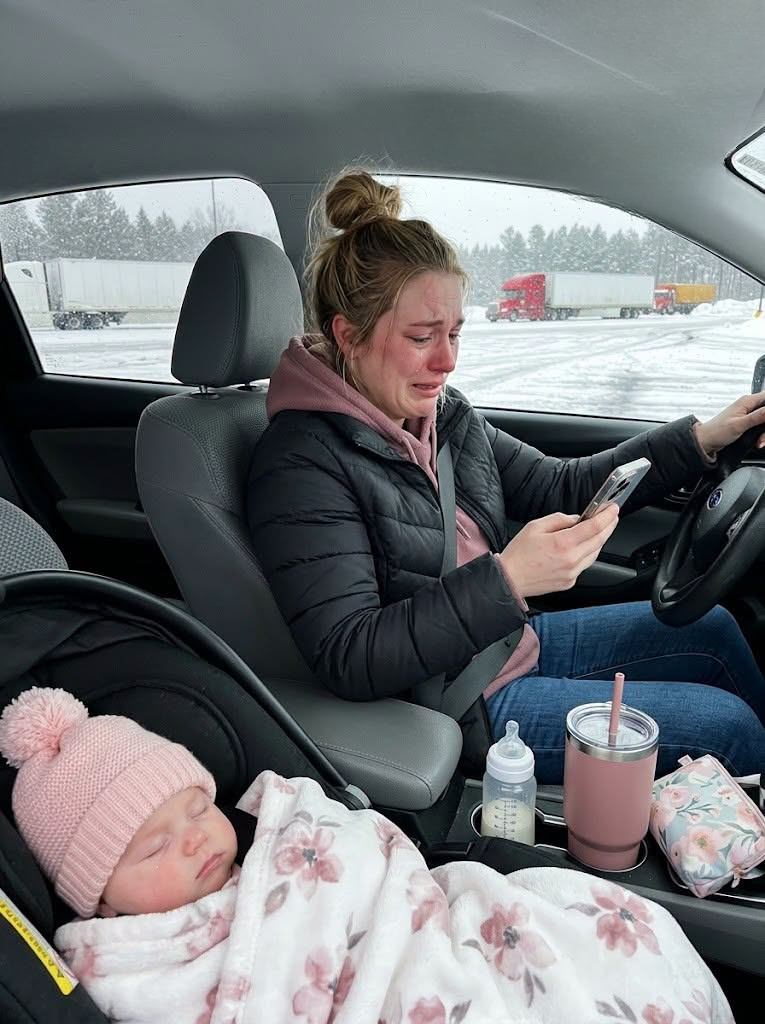
My mother sent me one text while I was driving three hours to celebrate her birthday.
“Skip my birthday. We need a break from your kid.”
My daughter, Maisie, was only three months old.
I had a birthday present in the trunk—a framed photo of her that said “Grandma’s Girl.” I had driven through the rain, stopped to feed my baby, and done everything I could to be there.
Then I read those words again.
I didn’t argue. I didn’t call to ask what I’d done wrong. I simply replied, “Understood. Hope you have a nice birthday.”
Then I turned the car around and drove home.
For years, I’d been the daughter who helped everyone. I’d given my brother $3,000 for a business that never launched, paid $4,200 toward my sister’s wedding, helped my parents repair their roof, and covered the family’s phone bills for five years.
But after I became a single mother, it seemed my family saw me—and my baby—as an inconvenience.
That night, my best friend Vanessa listened while I cried. Then she told me something I needed to hear: I couldn’t keep paying for people who treated me like I didn’t matter.
The next morning, I removed myself from the family phone plan.
For the first time, I stopped chasing my family’s approval.
When Thanksgiving arrived, nobody from my family invited us. Instead, Vanessa arranged for us to spend the holiday at a beautiful Montana lodge with her wealthy friend Lauren and their close circle of friends.
I was nervous. I barely knew them.
But the moment we arrived, Lauren opened her arms and asked, “Can I hold her?”
Nobody complained when Maisie cried. Nobody treated her like a burden. During Thanksgiving dinner, one guest even took her for a walk so I could eat in peace.
Later, the chef brought me a plate of warm food because she’d noticed I hadn’t finished eating while caring for the baby.
I started crying.
It wasn’t the food. It was the feeling of someone noticing that I needed care, too.
For the first time in months, Maisie and I felt genuinely welcome.
Two weeks later, my mother finally called.
“Why didn’t you invite us to Thanksgiving?” she demanded.
I was stunned. The same woman who had told me to keep my baby away now wanted to know why we had celebrated without her.
I didn’t rush to apologize. I had begun to understand that family wasn’t just about sharing a name. It was about showing up, offering kindness, and making room for the people you claimed to love.
Over time, things began to change. My father slowly grew closer to Maisie, and my mother started learning how to be a grandmother. The hurt didn’t disappear overnight, but I no longer sacrificed my peace just to keep everyone happy.
Today, Maisie is fourteen months old. She loves ducks, laughs at everything, and walks through the world with her arms wide open.
And I have made myself one promise:
My daughter will never have to wonder whether she’s wanted. She will grow up surrounded by people who make her feel loved—not tolerated.