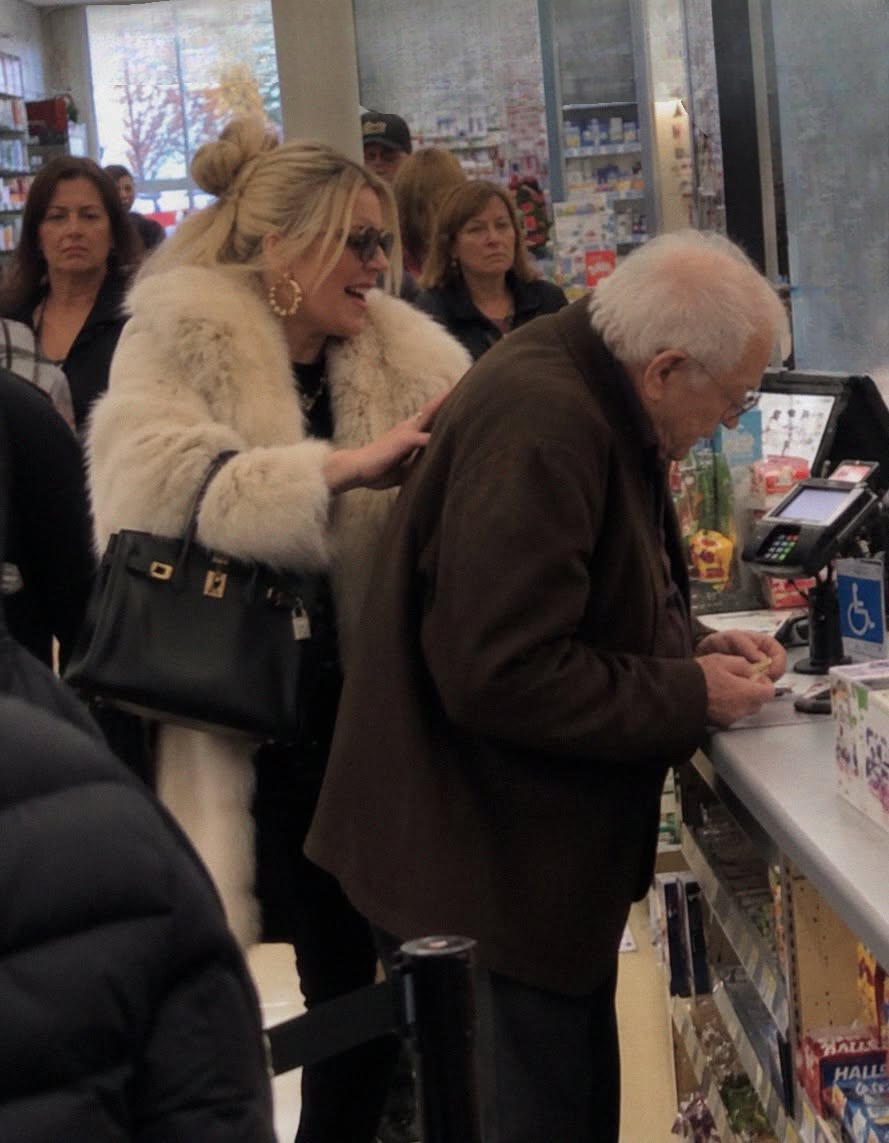
Are you seriously paying with pennies?” the young woman snapped at my 76-year-old father at the pharmacy.
Dad’s hands trembled as he carefully counted the coins for his heart medication.
“Some of us actually have places to be!” she complained. “If you can’t afford your medicine, stop wasting everyone’s time!”
I rushed inside, ready to defend him. But Dad stopped counting, opened his old brown wallet, and pulled out a photograph.
The woman’s expression changed instantly.
“Where did you get that?” she whispered.
Then she screamed.
The photograph showed my late mother, Ruth, sitting beside a hospital bed with a little blonde girl holding a stuffed rabbit.
The woman was Paige, the little girl in the picture.
Six years earlier, my mother had passed away. But before her death, she had spent years volunteering at a children’s hospital, comforting frightened children and helping families who were struggling.
Paige had been one of those children.
When she was eight, she spent long periods in the hospital while her mother worked two jobs. She often felt like a burden, afraid that asking for anything would inconvenience someone.
My mother changed that.
She sat beside Paige, read her stories, and even repaired her beloved stuffed rabbit, Buttons, using yellow thread. Paige had never forgotten the kindness.
Dad recognized the rabbit charm hanging from Paige’s handbag and remembered the story my mother had told him about the little girl.
When Paige realized whose photograph Dad was holding, she broke down.
“I thought I’d never see her again,” she whispered.
Dad gently explained that my mother had remembered her for years. She had even kept a letter Paige wrote as a child.
In it, Paige thanked my mother for staying with her when she was scared and wrote, “When I grow up, I want to be kind like you.”
Paige stared at Dad, ashamed of how she’d treated him moments earlier.
“I’m so sorry,” she said. “I thought you were wasting everyone’s time.”
Dad calmly replied, “You didn’t need to know my reason. People are allowed to take a little longer.”
He explained that his hands trembled, and being rushed only made counting harder.
Paige offered to pay for his medication, but Dad refused. He wasn’t interested in money or revenge. He wanted her to understand that people deserved patience and respect.
Before leaving, Paige asked if she could stay in touch. Dad agreed.
That evening, I found the letter my mother had kept among her treasured belongings. The next day, Paige came to our home, and I handed it to her.
She read her childhood words through tears.
“I remember wanting to be like her,” she admitted. “She made me feel safe when I thought everyone was tired of helping me.”
Then she looked at Dad.
“And yesterday, I made you feel like you were bothering everyone just because you needed time.”
Dad didn’t pretend her behavior was acceptable.
“You don’t have to stay that person,” he told her.
Paige asked for a copy of the letter, and we gladly gave her one. She left promising to visit again.
Afterward, Dad sat at the kitchen table sorting coins into his old jar. He explained that my mother used to collect spare change to buy small toys and coloring books for children at the hospital. He had continued the tradition because it reminded him of her.
I sat beside him and helped count the remaining coins.
For years, I’d thought helping Dad meant taking over the things he struggled to do. That afternoon, I understood something different.
He didn’t need me to take away every difficult task. Sometimes, he simply needed someone to stand beside him.
The young woman had entered the pharmacy judging an elderly man by the coins in his hand. She left having rediscovered the kindness my mother had taught her years earlier.
Never mistake someone’s struggle for a reason to humiliate them. You never know what they’ve lived through—or what their story might teach you.