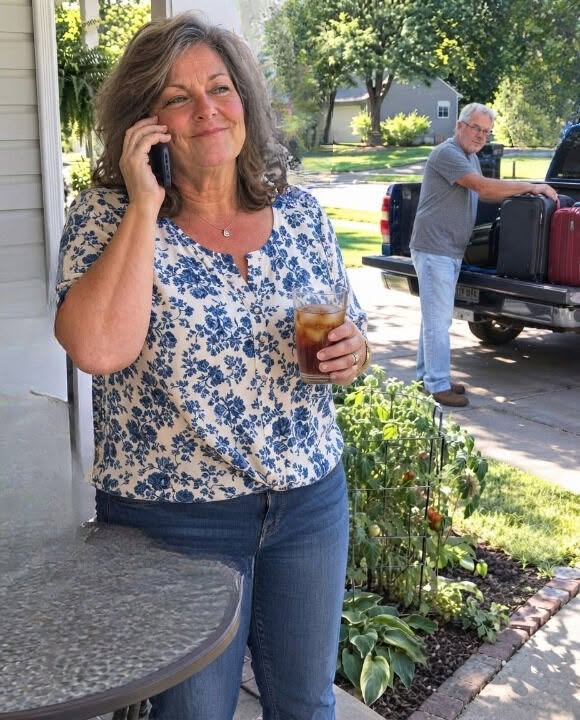
At 2:47 on a Friday afternoon, I received a call from the Georgia Lottery Claims Center. My husband of 34 years was standing in their office, trying to claim a $2.4 million jackpot from a ticket he had secretly taken off our refrigerator.
Only hours earlier, he had served me divorce papers and coldly declared that I would walk away with practically nothing.
“Mrs. Dunn,” the representative said carefully, “someone has signed the winning ticket, but the signature doesn’t match your husband’s identification.”
I smiled.
“That’s because the signature is mine.”
My name is Patricia Dunn. I’m 58 years old, and for most of my marriage, my husband, Gary, controlled our finances. Although I worked at the county health department, he gave me a limited weekly allowance and questioned every extra expense.
Before my mother died in 2006, she made me promise something.
“Find one thing in this world that belongs to you. Put your name on it, and never forget that you matter.”
Three days after her funeral, I bought my first lottery ticket. I signed my full name on the back and wrote, “Week 1. For Mama.”
From that day forward, I purchased a ticket every Friday, always choosing the same numbers and signing the back. A local store owner, Mr. Mehta, witnessed my signature and added his initials and the date.
For 19 years, I kept the tickets in a shoebox hidden behind my winter boots. Sometimes, I wrote little notes about my children’s milestones, family struggles, and the moments when I felt invisible in my own home.
Gary laughed at my habit, calling it a waste of money. He never bothered to look at the signatures.
Then, one Friday, I bought my usual ticket and placed it beneath my mother’s old pineapple-shaped refrigerator magnet.
A few days later, it disappeared.
Gary claimed it had probably fallen behind the refrigerator. But suddenly, he began bringing me tea and asking about my hospitalized sister. His unusual kindness made me suspicious.
Then I checked the winning numbers.
Every single one matched.
The jackpot was worth $2,412,000.
Before I could even process the news, Gary handed me divorce papers. He claimed our assets were mostly in his name and that I would receive practically nothing.
“Half of nothing is nothing,” he told me.
I simply replied, “Okay, Gary.”
He expected tears and arguments. Instead, I watched him leave for Atlanta, knowing exactly where he was going.
I retrieved my shoebox of signed tickets and waited.
When the lottery representative called, I described my signature, the handwritten note about my sister’s surgery, and Mr. Mehta’s initials. He confirmed my account and provided the dated records he had kept for years.
The lottery suspended payment while officials investigated the competing claims.
But that wasn’t the only secret uncovered.
My attorney discovered an undisclosed bank account funded with money from our joint finances, a second mortgage I hadn’t known about, and an apartment lease connecting Gary to another woman.
He hadn’t simply decided to leave me. He had been preparing his departure for months.
Eventually, the lottery prize was awarded to me, and the divorce settlement addressed the other financial issues.
For the first time in my adult life, I controlled my own money.
I paid my sister’s remaining hospital bills, helped my children with their financial needs, and donated to local healthcare programs. I also established a financial literacy course for older women, naming it after my mother.
Then I thanked Mr. Mehta by helping pay for a new roof at his gas station.
A year later, I bought one final lottery ticket. I signed my name and wrote, “Week 989. Last one. Thank you, Mr. Mehta.”
He added his initials and four words:
“It was always yours.”
I placed the ticket beneath my mother’s pineapple magnet.
It didn’t win, but I no longer needed it to.
For 34 years, I had allowed my husband’s name and decisions to dominate nearly every part of my life. Now, my own name was on my bank accounts, financial records, and mailbox.
People sometimes ask what advice I’d give a woman who has spent her life putting everyone else first.
I tell her what my mother told me: find something that’s yours, put your name on it, and never forget that your life matters, too.
Because the greatest prize wasn’t the money.
It was finally having the freedom to build a life that belonged to me.