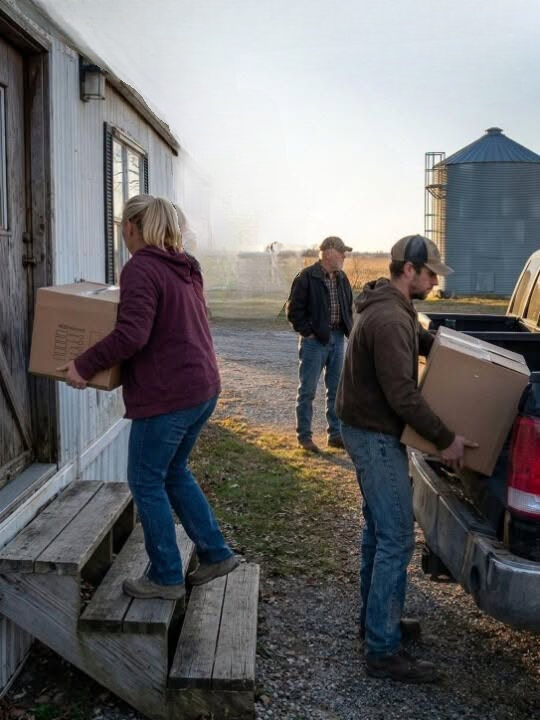
For ten years, my husband Nate and I worked on his parents’ 1,200-acre farm in Minnesota.
We handled everything: planting, harvesting, repairing machinery, caring for livestock, managing finances, and responding to emergencies at all hours.
In return, we received just $1,500 a month combined, along with an old mobile home and basic utilities.
I managed the farm’s finances, so I knew exactly how much money the operation was bringing in.
Yet whenever we asked for a raise, my father-in-law, Vern, insisted there wasn’t enough money.
Eventually, I asked him for just $500 more per month.
Our furnace kept breaking, our health insurance cost $640 monthly, and neither of us had received a raise in ten years.
His answer?
There was no money.
But something happened that made us question everything.
While we struggled to cover basic expenses, Vern and his wife, Judy, spent more than $60,000 on their daughter Tiffany’s wedding.
The celebration included an expensive reception tent, catering, entertainment, decorations, and renovations to the old barn.
Some of the money came from the farm’s earnings.
Watching that happen after years of being told there was no money left was the final straw.
After the wedding, Nate and I made a decision.
We were leaving.
Nate had already spoken with a neighboring farmer named Paul Engstrom, who offered him a $58,000 annual salary, health insurance, and a comfortable farmhouse.
It was more than we had ever imagined earning from our work.
Paul also saw potential in Nate and discussed eventually making him a business partner.
Soon, we began preparing the paperwork for a new farming arrangement, including a crop-share lease and equipment purchase agreement.
For the first time, we had an opportunity to build something of our own.
When Vern realized we were serious about leaving, he finally understood what he was losing.
He eventually admitted that Nate deserved better and offered an apology.
After several discussions, a new arrangement was reached that allowed Nate to return to manage the family acreage under fairer terms.
We established a profitable operation, hired an employee, and made sure he received proper wages and health insurance.
Two years after leaving that old trailer, I handed Vern our first lease payment.
He carefully examined the check before accepting it.
Not long afterward, he gave me another check for $5,500 to compensate us for the broken furnace and the raises we had been denied.
I kept that check as a reminder.
It wasn’t really about the money anymore.
It was about ten years of hard work finally being recognized.
And beside the old mobile home, Nate built a small deck with a bench and a sign that said:
“HIRED MAN’S PORCH. EVERYBODY GETS PAID.”
For the first time in ten years, we finally felt respected.