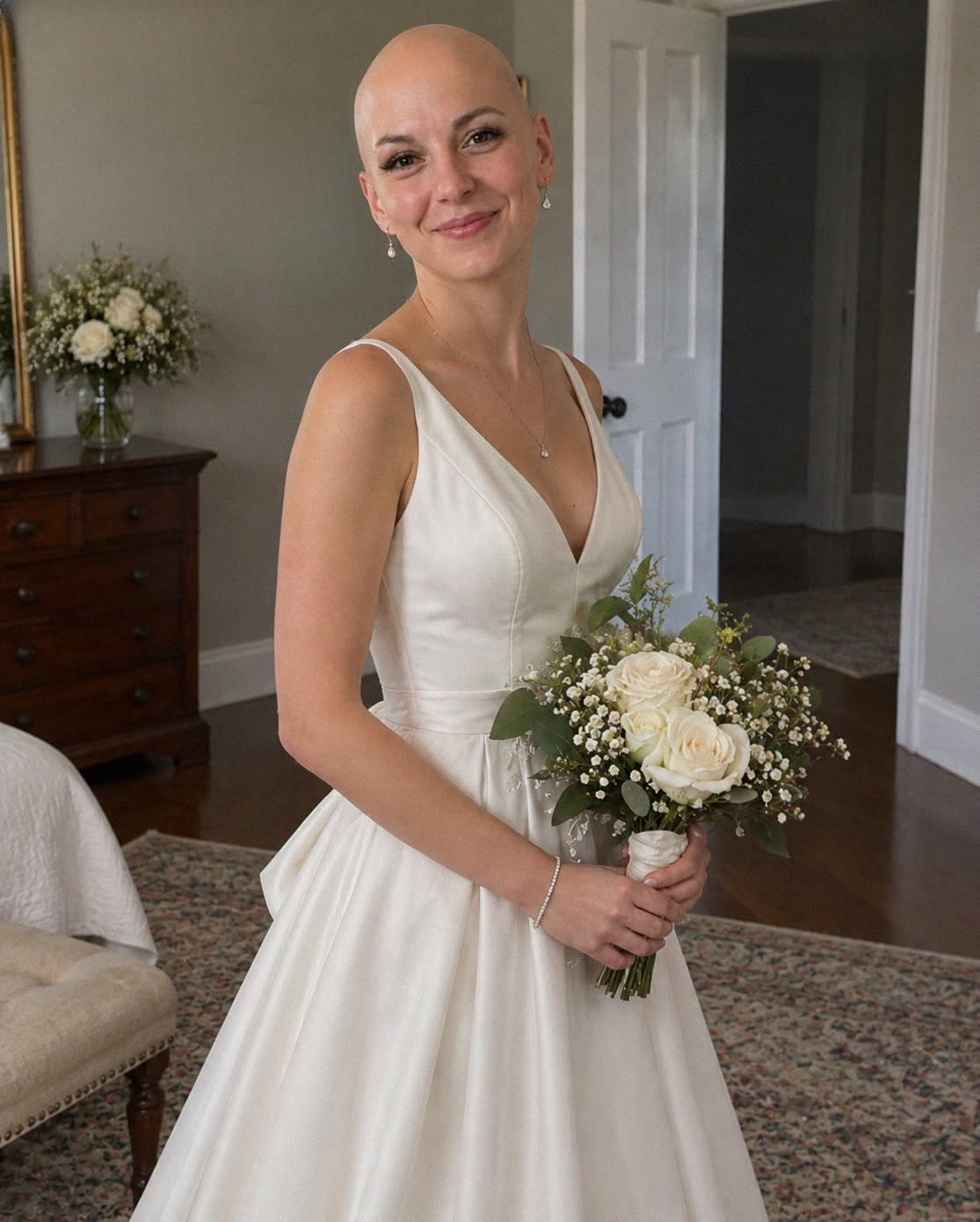
After postponing our wedding twice because of my cancer treatment, I was finally walking down the aisle toward Ben, the man I loved. I’d lost my hair during treatment, but I had decided not to wear a wig. I wanted to stand beside him exactly as I was.
Then, halfway down the aisle, his mother, Judith, stepped in front of me holding a blonde wig.
“Put this on. Quickly.”
She called my bald head an embarrassment to the family and insisted I hide it before the photographs were taken. The music stopped, the guests stared, and I felt humiliated.
Ben immediately told his mother to put the wig away, but Judith refused to listen.
Then my mother stood up.
She quietly asked the pastor for help and disappeared into the preparation room. A few moments later, she returned carrying a case filled with the wigs I’d tried during treatment.
She picked up an auburn wig, put it on her own head, and turned toward Judith.
“If wearing a wig is what makes someone acceptable in these photographs, I’ll wear this one.”
My sister put on another wig. The bridesmaids joined in, and even my father wore one.
Suddenly, the church was filled with people wearing wigs while I stood there proudly with my bare head.
Judith was furious, but Ben surprised everyone by putting on the blonde wig she’d brought and taking my hand.
“I’m standing with her,” he said.
I finally told Judith that my bald head wasn’t shameful. I’d lost my hair fighting to get well enough to marry her son, and I was proud to have made it to that moment.
She eventually stepped out of the aisle and sat down.
The ceremony continued, and Ben and I finally exchanged our vows.
After everything we’d been through, I walked away with something more important than perfect wedding photographs: the knowledge that the people who truly loved me would never ask me to hide who I was.