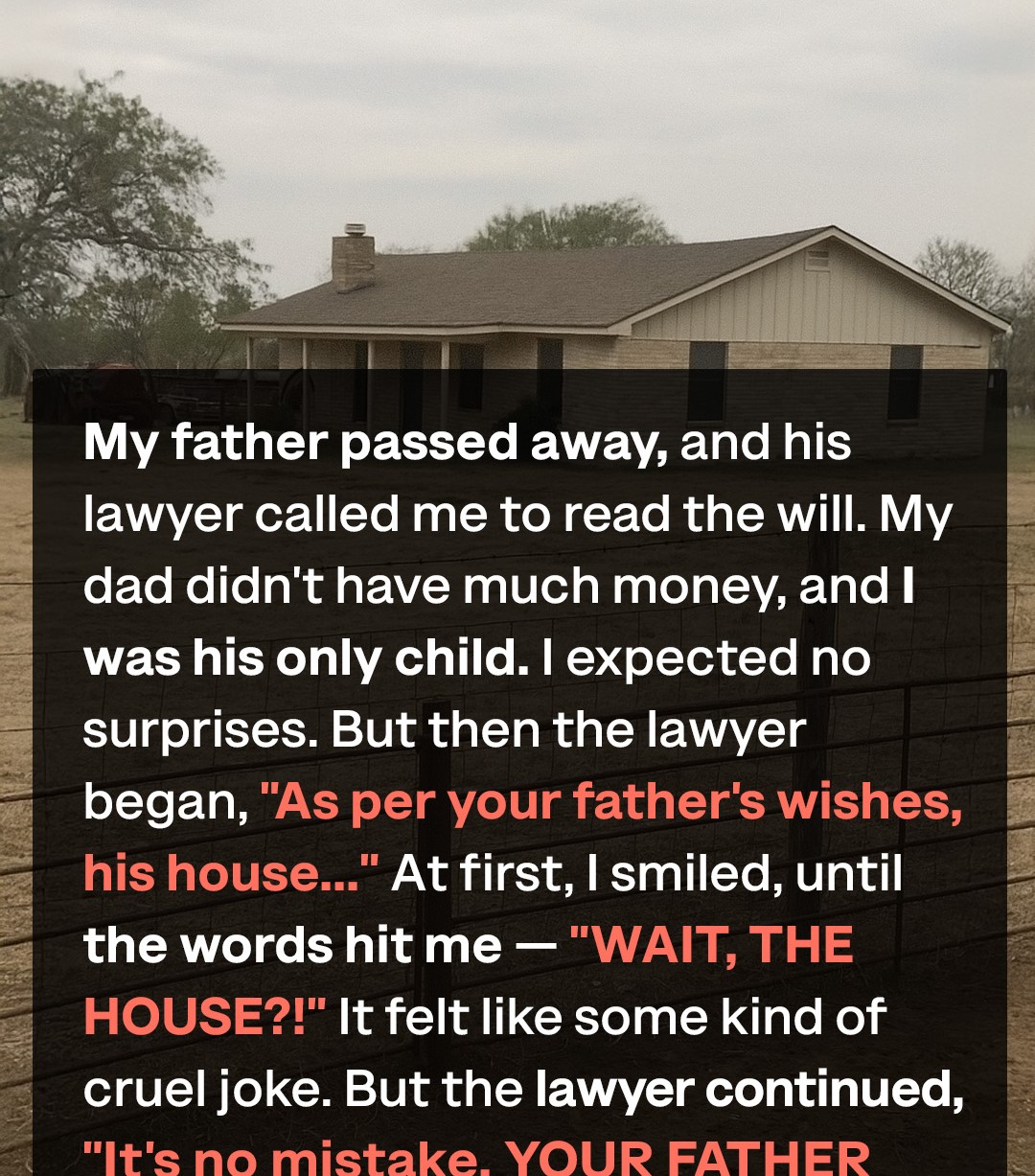
When my father died, I thought I had nothing left—until a notary revealed he’d left me a house I’d never heard of. Curious and confused, I went to see it. But when I arrived, an older woman answered the door, claiming she owned it. Her name was Deborah, and she wasn’t leaving.
I insisted the house was legally mine; she refused to budge. Tension turned into petty sabotage—she hid my things, ruined my clothes, and made life miserable. Still, I sensed her pain ran deeper than defiance.
Then came the truth that shattered everything I knew.
“This house isn’t yours,” she said. “It was never supposed to be.”
Through tears and rage, she revealed who she really was—my mother. The woman my father told me was dead. She had left us once, made mistakes, and when she tried to return, he shut her out and kept me hidden.
The house had been his silent tribute to a past too painful to revisit.
In court, Deborah won ownership—twenty years of living there gave her that right. I packed to leave, but before I stepped out, she stopped me.
“I don’t want to lose you again,” she said. “Stay. Let’s try.”
I stayed.
We weren’t perfect, but slowly, we began to heal. The house wasn’t just bricks and memories anymore—it became a new beginning for us both.