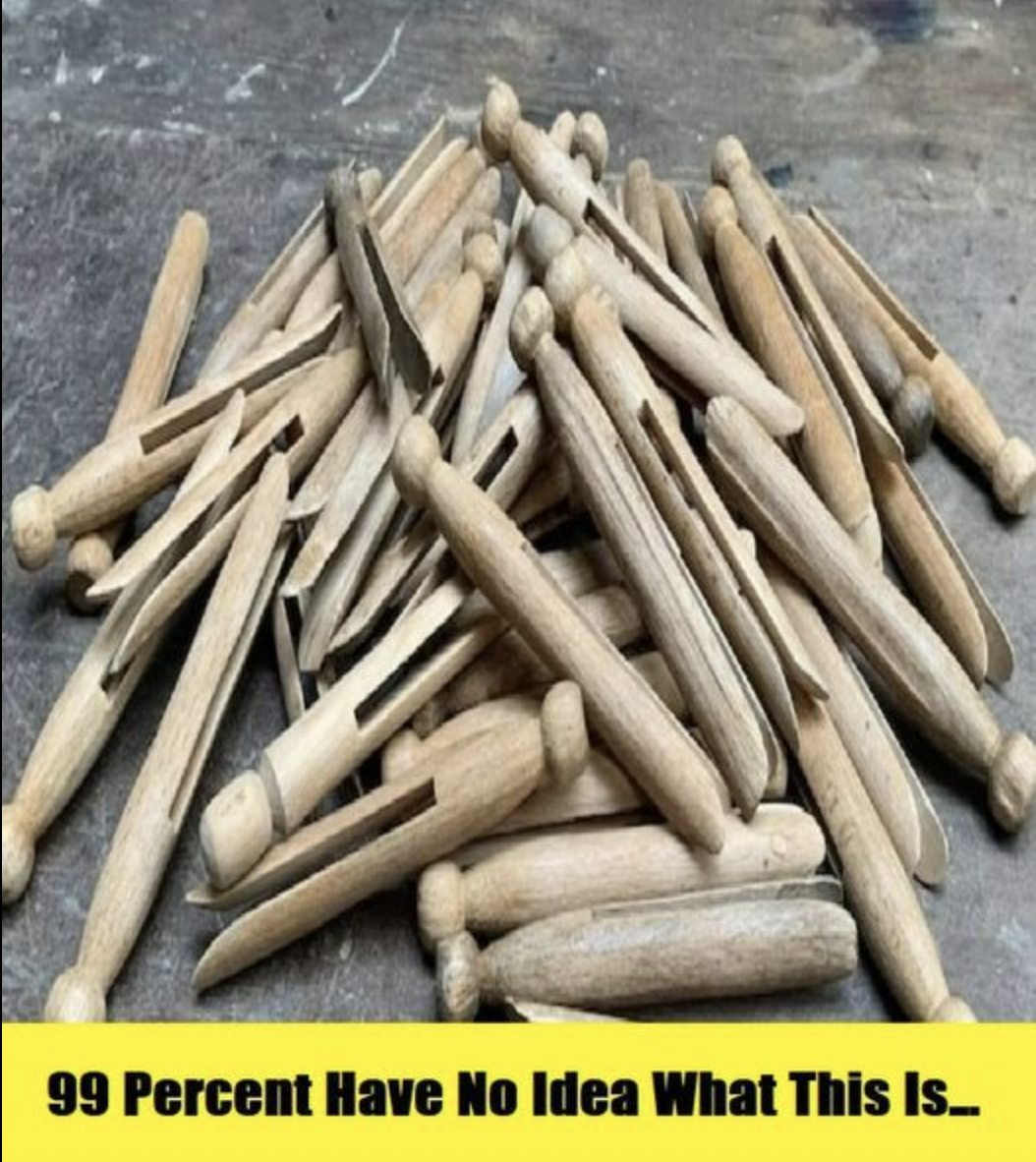
Before technology complicated laundry, people relied on simple, effective tools—like the wooden clothespin—to manage chores. Originally a one-piece wooden peg, it evolved into a two-piece pin with a spring, securing clothes to lines and protecting them from being lost to the wind—a common problem for early washerwomen.
Recently, a social media post about small wooden dowels with legs sparked memories among older generations, who identified them as classic clothespins once used to hang wet laundry outdoors.
Clothespins date back to ancient times, with early versions made from wood, bone, or stone—often hand-carved with decorative touches. The familiar modern design emerged in the 19th century, notably patented by David M. Smith in 1853. His spring-loaded version was a major improvement, gripping clothes firmly and resisting wind.
As industrialization advanced, clothespin production became faster and cheaper, making them a household staple. Despite the rise of plastic versions and electric dryers, wooden clothespins endured for their simplicity, durability, and eco-friendliness.
Today, they’re still used for laundry and crafts—and cherished as nostalgic icons of sustainable living.