The rain fell hard that night, pooling in the alleys where sixteen-year-old Eli sat behind a diner, soaked and hungry. His mother was gone, his father lost to grief and addiction, leaving Eli to survive on scraps and odd jobs. Life had hardened him, but not enough to kill his kindness.
From a nearby alley came shouts. Three men were attacking a weary biker — leather jacket, Hells Angels patch glinting in the rain. Eli froze, then ran. The metal pipe came down, and Eli took the blow meant for the biker.
When police sirens scared the attackers off, the biker knelt beside him. “Why’d you do that, kid?”
Eli whispered, “Nobody deserves to be hurt like that,” before blacking out.
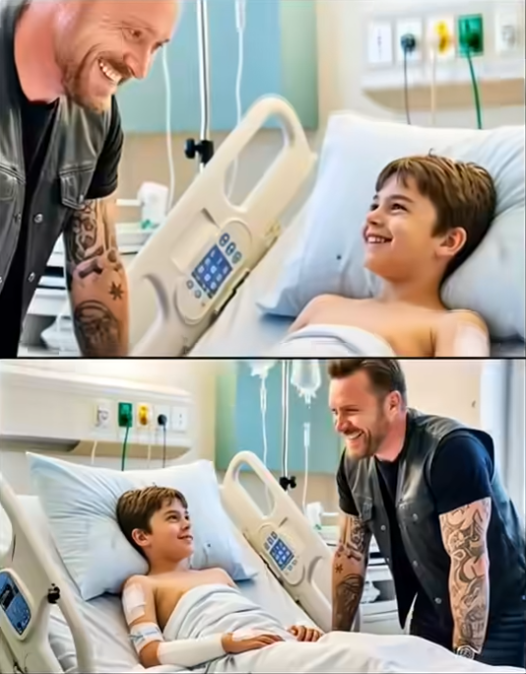
He woke in a hospital to find the biker still there. “Name’s Ray,” he said. “You saved my life.” Ray listened to Eli’s story and, when he was discharged, refused to let him return to the streets. He took him in — a small garage, warm meals, a bed, and honest work.
Word spread about the “street kid who saved a Hells Angel.” Eli became a local hero. Donations poured into shelters, though not everyone was kind. When Eli told Ray about the gossip, Ray said, “Let them talk. What matters is who you are when nobody’s watching.”
Weeks later, Ray took Eli to a field filled with hundreds of bikers. Engines rumbled as the chapter leader stepped forward. “This kid did what most men wouldn’t. That kind of courage deserves respect.” He placed his vest on Eli’s shoulders.
“From now on, you’re family.”
The crowd roared, engines thundering in salute. The story spread nationwide — sparking donations, food drives, and hope.
Years later, Eli worked at Ray’s garage and helped other homeless kids. At eighteen, he stood before a crowd and said, “You don’t need much to change a life. Just the courage to care.”
That night, he and Ray rode side by side under the stars — no longer a lost boy, but part of a family.
And in that small town, the roar of engines became the sound of hope.