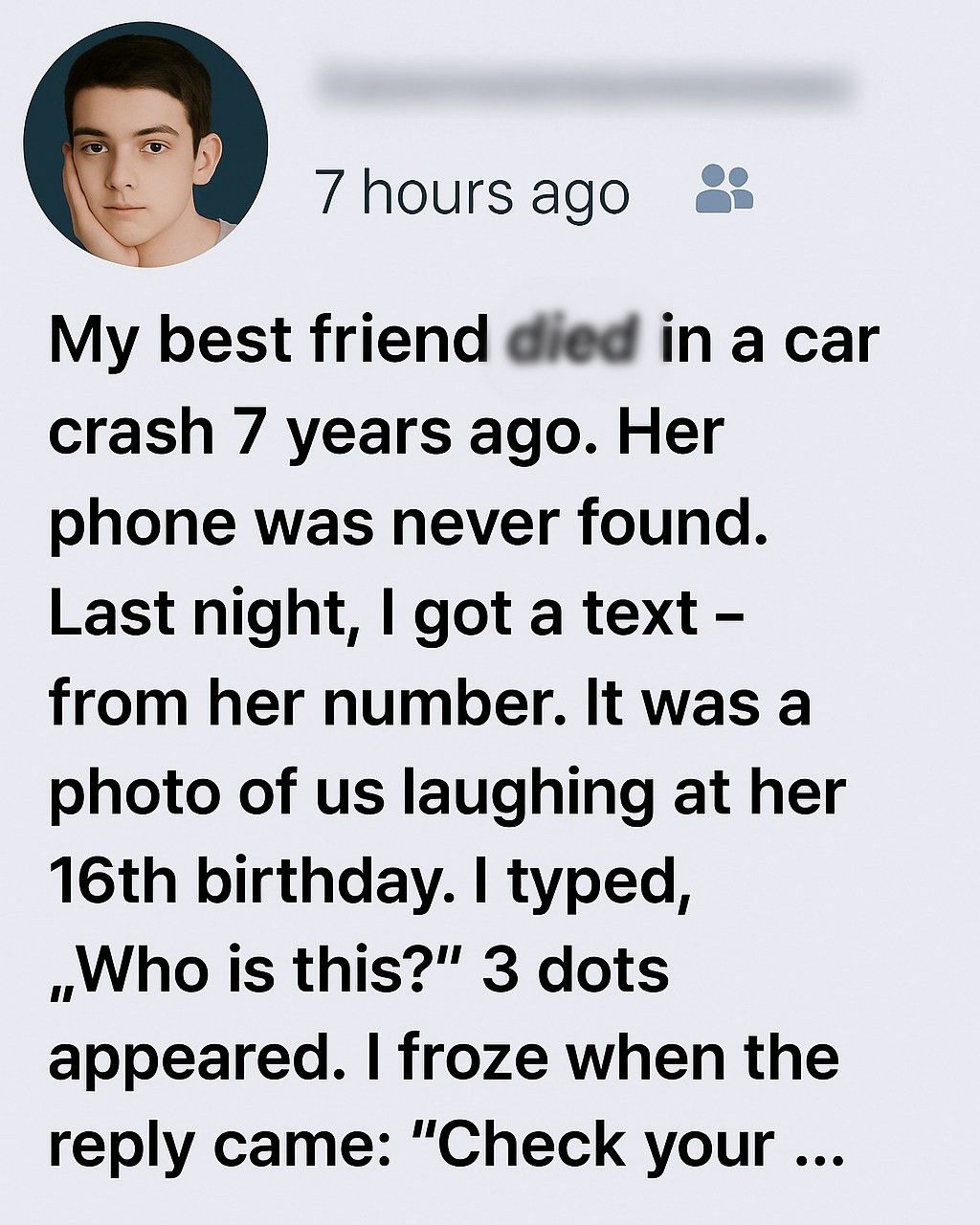
Seven years after the crash that was supposed to have killed Adira, I was lying in bed when a notification lit up my screen. It was a text from her old number—attached was a photo of us at her 16th birthday, laughing with frosting on our faces. My heart pounded as I typed: Who is this?
The reply came instantly: Check your mailbox. Barefoot and shaking, I rushed outside. Inside the mailbox was an envelope with my name written in the same blue gel pen Adira always used.
I opened it with trembling hands. Inside were old photos of us—along with a recent picture of me at my cousin’s wedding, clearly taken without my knowledge. Panic surged as I ran back inside and dialed the number.
When the call connected, I heard her voice. “Hey. It’s me.” She asked me to meet her at our old lookout at dawn.
The next morning, I drove there—and she was standing beside a silver sedan, alive. Same curls. Same freckle.
Same eyes that once held my entire world. Through tears, she explained everything. She hadn’t died in that crash.
She had escaped, terrified and injured, after a dangerous older man she’d been seeing caused the accident. Convinced she would be blamed, she disappeared and built a hidden life, watching mine from a distance. Then she told me why she had returned: late-stage leukemia.
And a son—Kian—now in foster care. She didn’t want him lost in the system. She asked if I would take him.
The following weeks blurred into paperwork, home visits, and cautious dinners. Slowly, Kian became part of my life—weekends, laughter, Lego cities spreading across my living room. Adira and I spent her final months quietly, grateful for every hour.
She passed away peacefully. Two years later, Kian is thriving. Every night, we tell her about our day.
People disappear. Sometimes they come back. And sometimes love returns in the form of a child who needs you.