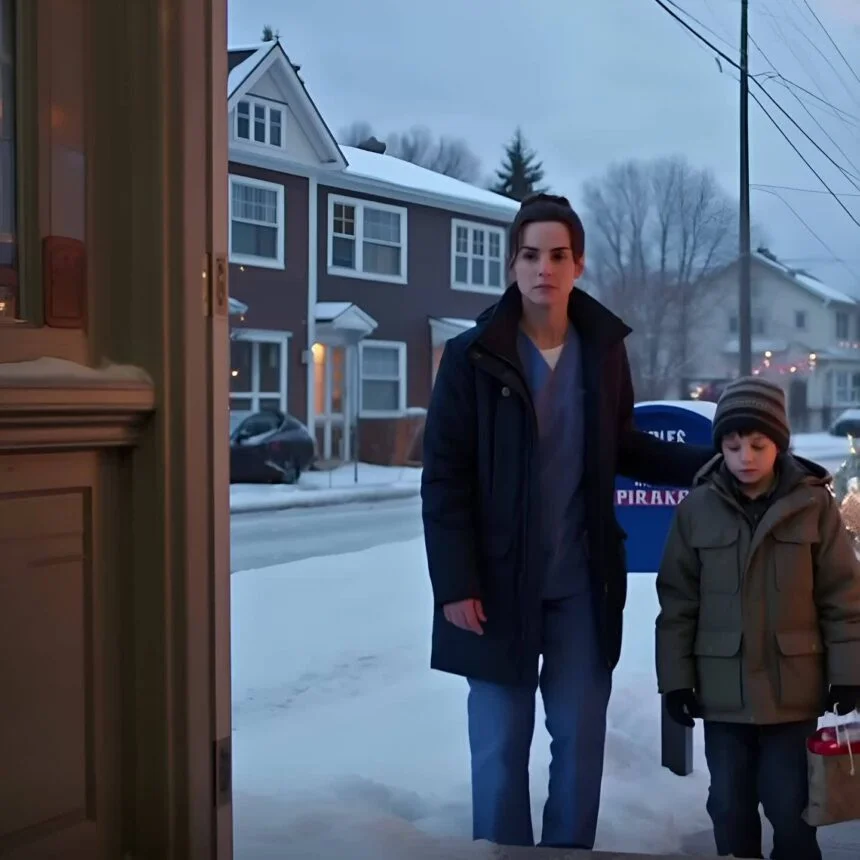
On Christmas Eve, while I was working, my 14-year-old son walked three miles in the cold to my parents’ house with a bag of carefully chosen gifts. My mom opened the door, looked at him, and said, “We’re keeping it small this year. Only real family.” Then she shut it in his face.
He walked home alone.
That night, when he quietly told me what happened, something shifted in me. I didn’t yell. I didn’t argue. I simply withdrew every dollar I’d contributed to the shared family account over the years—money I’d given for repairs, vacations, emergencies—because I thought we were family.
When we confronted them, they called it a misunderstanding. I asked one question: would they have shut the door on my sister’s child? Silence.
After that came gift baskets, cheap apologies, and finally a visit demanding a “fresh start.” But they never truly said sorry. They tried to smooth it over with presents instead of accountability.
So I made it clear: they shut the door on my son, and now that door was closed to them.
We burned the gifts. We stopped answering calls. We chose peace over pretending.
Later, my son used his leftover Christmas money to book us a small cabin for a weekend away. Just us. No tension. No conditions. We started our own traditions.
This was never about revenge. It was about teaching him that love isn’t conditional—and that you don’t beg to stand where you’re not welcomed.
They closed the door first.