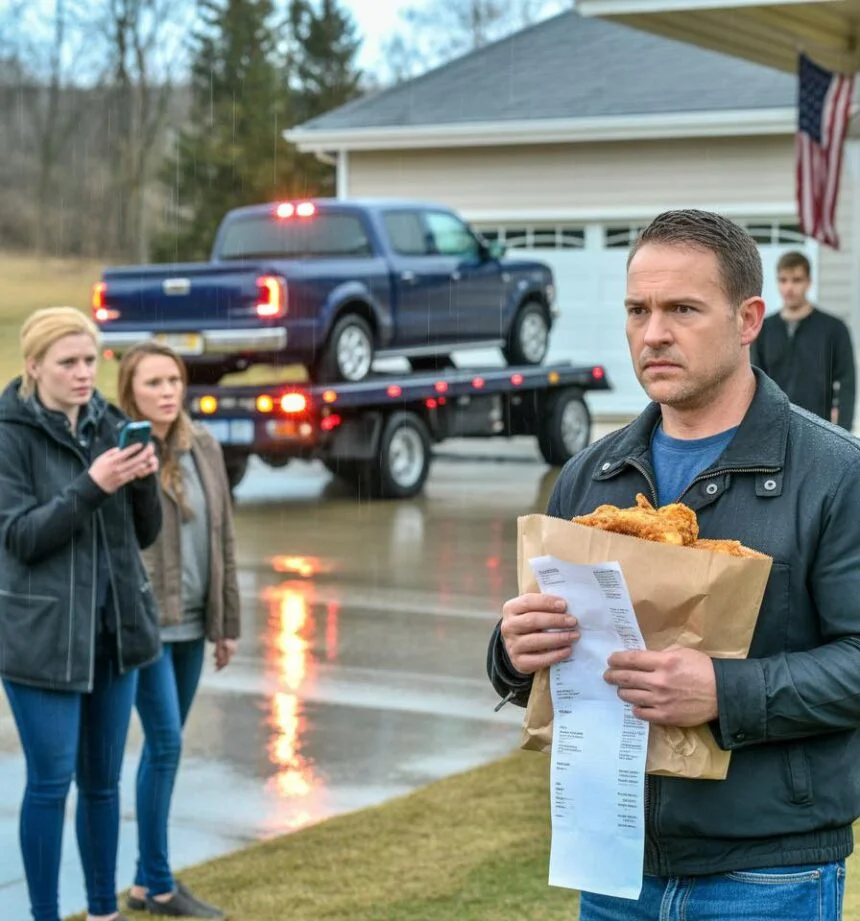
I came home one night with a bag of fried chicken and overheard my stepson, Trevor, in the garage saying he’d cut my brake line and that I “wouldn’t make it to Monday.” My wife, Deborah, was on the phone with him—calm, supportive. They were planning my death.
Instead of confronting them, I called a tow truck and had my truck taken to Trevor’s biological father, Eugene, a mechanic. He found the brake line had been cleanly cut—deliberate sabotage. We called the police. Soon after, Deborah went on social media painting me as unstable.
As the investigation unfolded, security footage showed Trevor buying a tubing cutter, followed by Deborah at the same store. Then I found a hidden burner phone in our house revealing Deborah’s affair and her plan to collect the house, retirement money, and life insurance. Even worse, I remembered the security cameras I had installed in the garage.
The footage captured everything: Deborah instructing Trevor to “make it clean” and cut the brake line so it looked like normal wear. It was clear, with audio.
In court, the evidence was overwhelming—store footage, forensic reports, text messages, and the garage video. Trevor and Deborah were both charged with conspiracy and attempted murder. Trevor took a plea deal (18–25 years). Deborah was found guilty at trial and sentenced to 15–20 years.
I divorced her, moved to a small apartment in Asheville, started therapy, and slowly rebuilt my life. A year later, I was safe, healing, and learning one powerful lesson:
Patience saved my life.
I didn’t react emotionally—I documented, gathered proof, and acted strategically.
If something feels wrong, trust your gut. Stay calm. Gather evidence. Get help.
Survival sometimes depends not on fighting first—but on waiting until you’re ready to win.