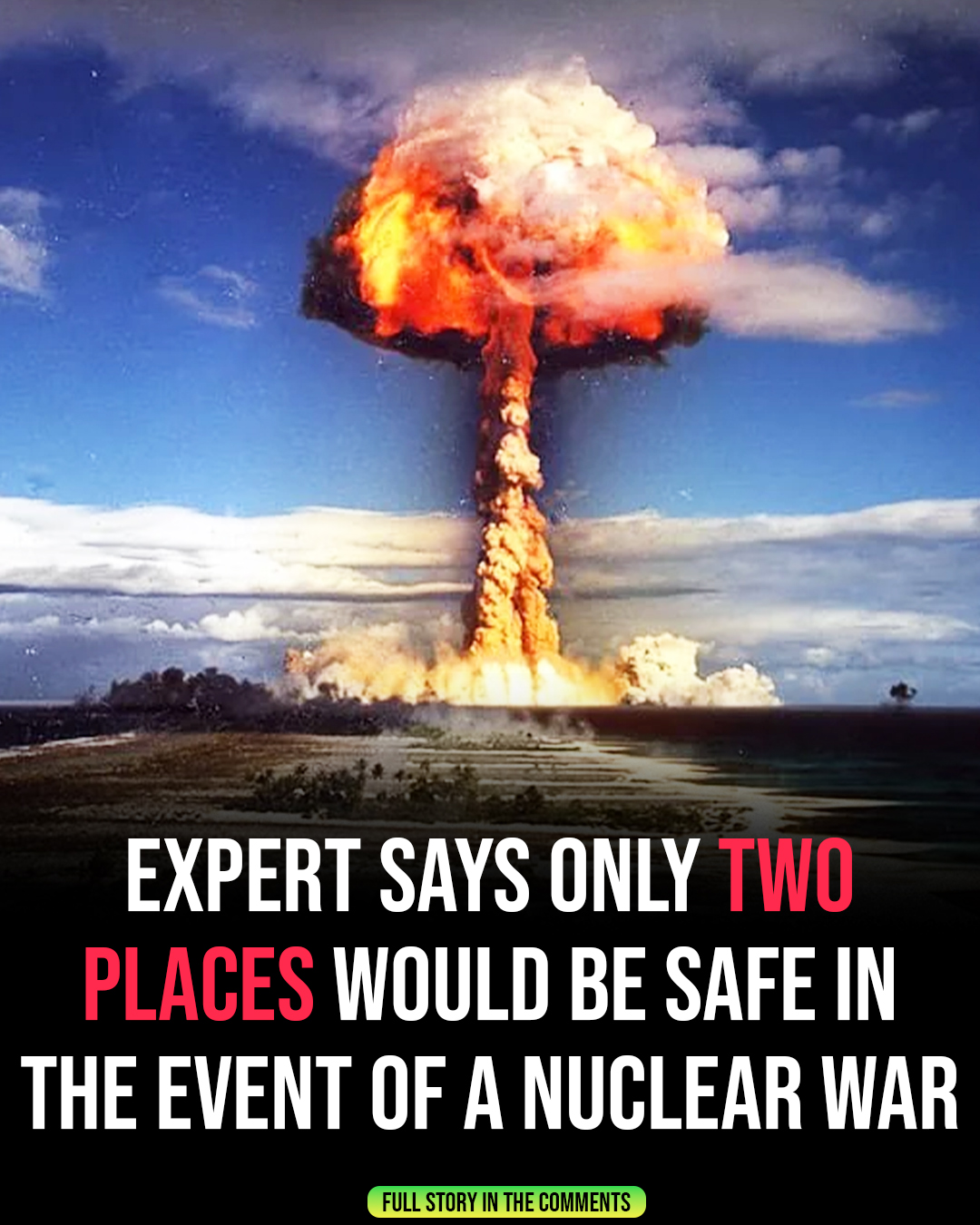

As tensions rise after U.S. and Israeli airstrikes on Iran, many Americans are wondering what would happen if the conflict escalated into World War III.
President Donald Trump has claimed Iran restarted its nuclear program and could quickly build a bomb, though The New York Times reports those claims are false or unproven. Still, the U.S. launched “Operation Epic Fury,” striking cities including Tehran and Isfahan. Analysts warn that retaliation could target U.S. nuclear missile silos, dramatically escalating the conflict.
The U.S. has about 2,000 nuclear warheads, mostly in Montana, North Dakota, and Nebraska. A direct strike on these sites could cause catastrophic radiation exposure across nearby states. According to Newsweek, states farther from nuclear infrastructure—mainly along the East Coast and parts of the South and Midwest—may offer slightly better short-term survival odds. However, experts stress that no U.S. location would be truly safe in a full-scale nuclear war.
In 2023, Scientific American warned that a major attack on U.S. missile fields could devastate surrounding regions and contaminate farmland for years.
For long-term survival, investigative journalist Annie Jacobsen said on The Diary of a CEO that Southern Hemisphere countries like New Zealand and Australia would offer the best chances during a nuclear winter. Their distance from major nuclear powers and ability to sustain agriculture could make them more viable than Northern Hemisphere regions, where extreme cold and crop failure would threaten survival.
Her conclusion: no one is truly safe in a nuclear war — but geography could significantly affect the odds.