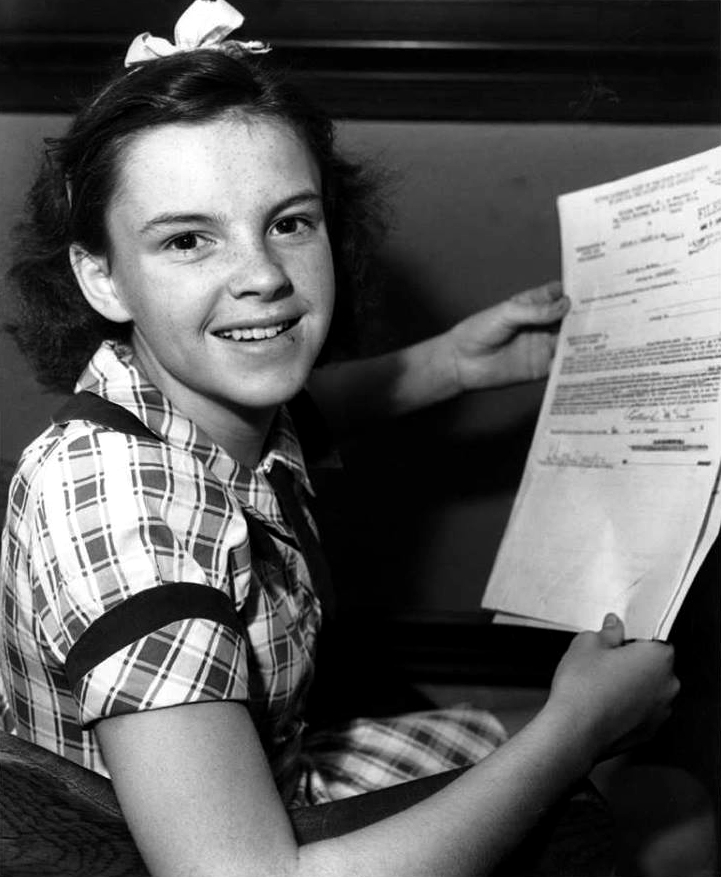
Judy Garland rose from a chaotic childhood to become one of Hollywood’s greatest stars — but her life behind the spotlight was marked by pressure, control, and addiction.
Born in Minnesota in 1922, she was performing before age three. Her unstable home life, her parents’ troubled marriage, and her mother’s harsh stage parenting shaped her early years. Garland later revealed she was given pills as a child to stay awake and to sleep — a cycle that led to lifelong dependence.
In 1935, she signed with Metro-Goldwyn-Mayer, where executives controlled her weight, diet, and image. Despite insecurities fueled by studio head Louis B. Mayer, she kept working nonstop through the late 1930s.
Her breakthrough came with The Wizard of Oz, where her role as Dorothy made her a global icon. She went on to star in classics like Meet Me in St. Louis and A Star Is Born, earning acclaim while battling depression, alcoholism, and mounting health struggles.
Known for her resilience, she once said, “I’m the queen of the comeback.” But years of substance dependence took their toll. In 1969, at 47, Garland died in London from an accidental barbiturate overdose.
Though her life was filled with hardship, those close to her remembered her as warm, funny, and extraordinarily gifted — a legend whose brilliance endured despite deep personal pain.