My name is Claire, the oldest of three sisters. In my family, being the oldest meant fixing problems, remembering everything, and making sure everyone else was okay. My middle sister Tessa loved attention, my youngest sister Rachel was the baby who got away with everything, and I was the one who cleaned up after everyone.
When I became a mom, I promised I’d do things differently. I adopted Maya when she was three. She had big, careful eyes, like she’d already learned the world could change without warning. The first time she called me “Mom” was in the back seat of my car, and I cried after dropping her at preschool. I promised she would never feel unwanted again.
But my family slowly proved how easy it is to say you love a child while treating her like she doesn’t quite belong. They called her “Claire’s girl” instead of their granddaughter or niece. Her drawings were ignored while her cousins’ went on the fridge. She noticed everything but kept trying anyway—being polite, helpful, and careful, like she was trying to earn love.
When Tessa got engaged, Maya was excited. She picked dress ideas, asked about her hair, and even made Tessa a glittery card. Tessa smiled, tossed it in her car, and later I found it crumpled under a coffee cup.
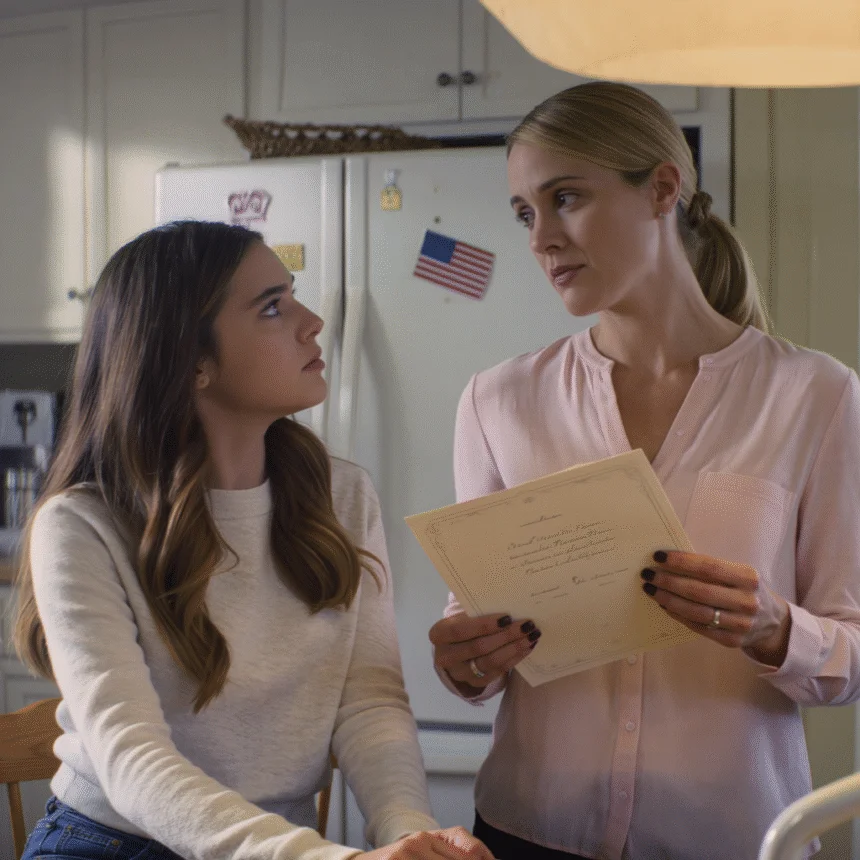
Then the wedding invitation came—Adults only. 18+. Strictly enforced. Maya was seventeen. She looked at me and quietly asked, “Is it because I’m adopted?” I told her no, but she had years of small moments telling her otherwise.
I RSVP’d not attending.
My family exploded—texts, calls, accusations that I was causing drama. But I refused to go without my daughter. Maya quietly deleted the dress photos she had saved, and that hurt more than anything.
When Christmas came, they assumed I’d host like always. I didn’t respond. Instead, we spent the holiday at home—pajamas, cookies, movies. It was peaceful in a way our holidays never had been.
That made my family furious. They said I was isolating Maya, that I was cruel, that I’d regret cutting them off.
Then one day my parents showed up at my door with cookies. During the conversation my mom finally said what she’d been hinting at for years:
“Maya isn’t blood. She’s not really one of us.”
I told them to leave.
Later, my sister Rachel told the extended family that Maya had manipulated her way into my life and turned me against them. Maya even saw comments online implying she should be grateful someone gave her a home.
So I collected everything—messages, screenshots, invitations—and wrote a simple letter explaining the truth.
On Christmas Eve I invited my parents and sisters to dinner. In the middle of the meal, I quietly sent that letter and the screenshots to the whole extended family.
Phones began buzzing around the table as everyone read the messages—especially the line where my mom said Maya wasn’t really family.
They panicked, accused me of humiliating them, demanded I fix it. I told them I couldn’t. That was the point.
They left furious.
But Maya just sat there quietly, watching them unravel, and said softly, “They can’t pretend anymore.”
After that, I blocked their numbers. Some relatives supported me, some didn’t. But the noise eventually faded.
Maya went to college for art and calls me most nights just to talk. When I dropped her at her dorm, she hugged me and whispered, “I’m not going anywhere.”
People say you can’t choose your family.
I did.
I chose my daughter.