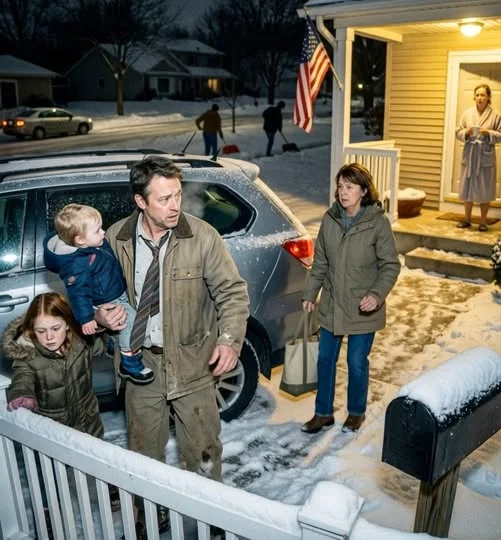
I entered through the garage out of habit, expecting the quiet of a normal home—but the silence was wrong. Snow tracked in, the kitchen clock ticked, but no life stirred. Then I heard it: a slow scrape from the hallway. My stomach tightened, a familiar dread.
There, in the pantry shadow, my seven-year-old daughter Mara was on the floor, dragging her baby brother Liam with a bathrobe belt around her waist. His body was hot, sluggish, feverish. Mara’s eyes met mine, not with relief, but with fear. “Don’t talk loud,” she whispered.
I learned he was locked in the pantry by Sabrina, my wife. Mara had quietly engineered his rescue, moving slowly to avoid anger. My world tilted—what I thought was normal was actually survival.
Sabrina appeared, calm and composed, as if nothing were wrong. But the truth had already shifted. I took Liam to urgent care; Mara followed with Ruth, our steadfast neighbor. The house I returned to felt like a stage that had been hiding its reality.
In the weeks that followed, Mara learned it was safe to be seen and heard. We rebuilt our routines, small gestures of care adding up—hot chocolate, flowers, good-jars of gratitude.
By spring, the tulips bloomed, and so did we. The house was no longer silent. Laughter, crying, and ordinary chaos filled it. Mara and Liam were safe. I was present. Imperfect, slow, but alive. We were blooming—finally, genuinely, together.