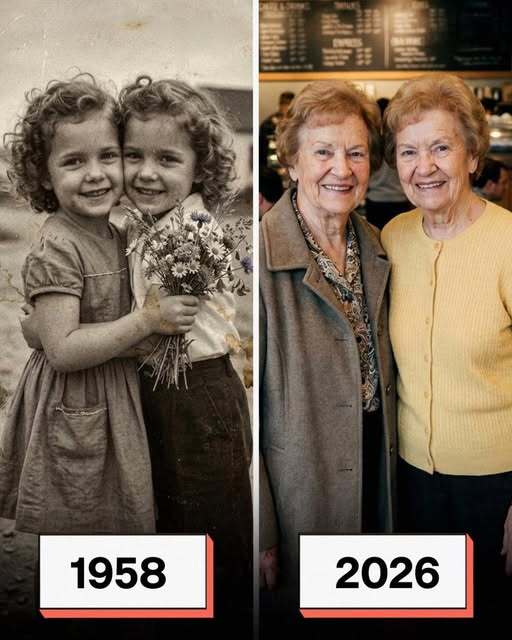
Dorothy spent her whole life carrying a “hole” in her chest shaped like her twin sister, Ella, who vanished at age five in the woods behind their grandmother’s house. Search efforts found only a red ball. Weeks later, she was told Ella had died, but no grave, funeral, or details were ever given—just silence and avoidance from her family.
Growing up, Dorothy never stopped questioning it. Even as an adult, she tried to reopen the case but was shut down. When her parents died, the truth seemed lost forever.
At 73, everything changed when she met a woman named Margaret in a café who looked strikingly like her. Margaret had been adopted from the same region and shared uncanny similarities. They later discovered through documents and DNA testing that they were full biological sisters—and that Dorothy’s mother had given Margaret up for adoption years before Dorothy was even born.
Hidden records revealed a painful truth: their mother had a child out of wedlock, was forced to give her up, and later had Dorothy and Ella. This exposed a deeply buried family secret and a life built on silence and shame.
The mystery of Ella’s disappearance remained unclear, raising the possibility that her “death” may have been a cover for an even darker family truth.
Dorothy and Margaret didn’t get a perfect reunion, but they built a real one. They now speak daily, share their lives, and slowly fill in the years they lost. Dorothy’s lifelong emptiness finally eased, replaced by understanding—and a sister she never knew she still had.