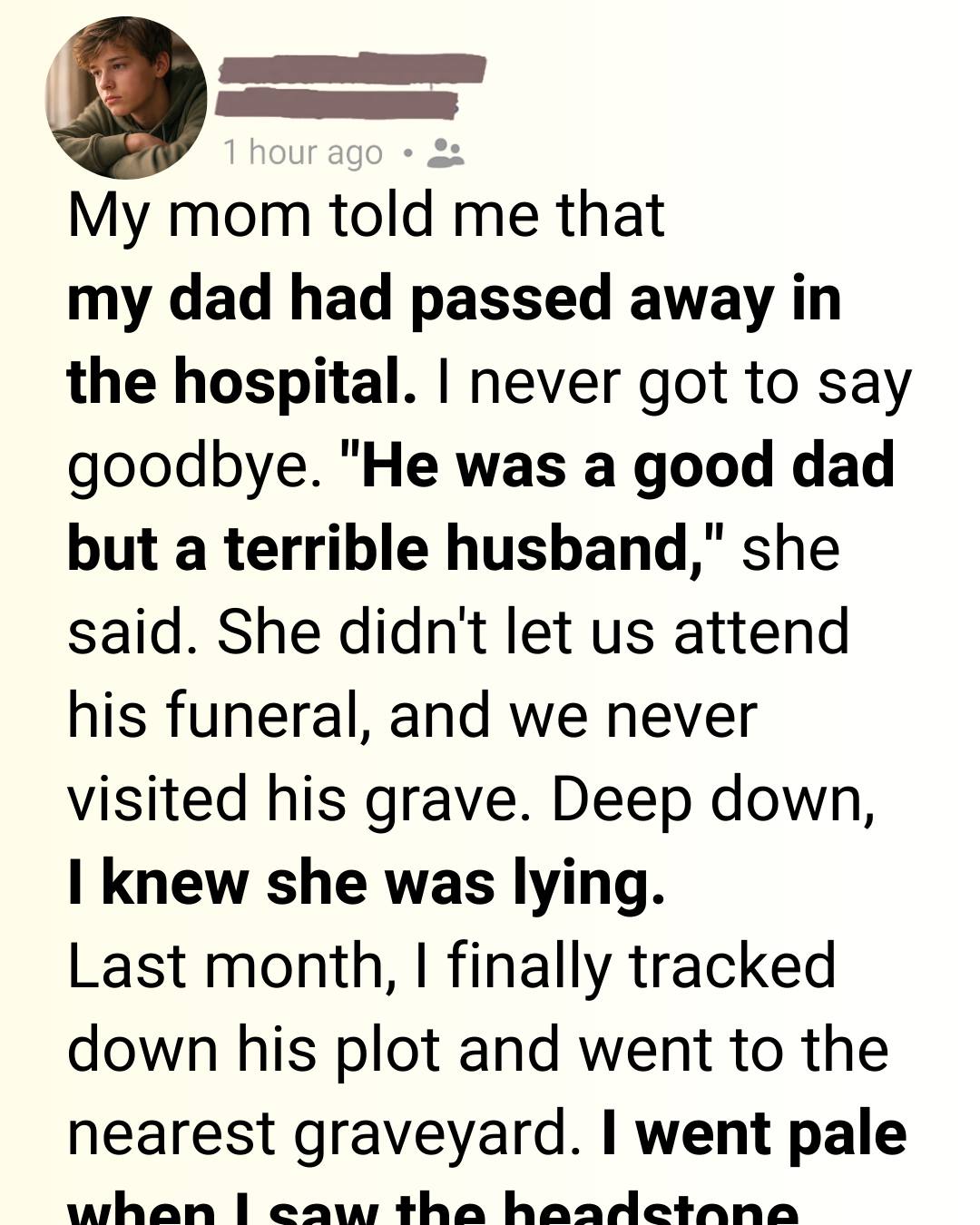
My mom never softened the truth. When my dad died when I was twelve, she sat us down and said, “He was a good dad, but a terrible husband.” No drama—just honesty.
She didn’t let us go to the funeral. Instead, she wanted our last memory of him to be the father who built birdhouses with us, not a coffin in the ground.
Growing up, I lived with that contradiction. I loved my dad—the one who showed up, taught me things, called me “kiddo.” But I also knew he had hurt my mom. And I never knew how to hold both truths at once.
We never visited his grave. I told myself I didn’t need to, but really I was afraid of what I might feel there.
Years later, I finally went. I expected something cold or forgotten. Instead, his grave was carefully maintained, and a small plaque had been added:
“He couldn’t be a husband, but he never stopped being a hero to his kids.”
I knew immediately it was my mom.
That’s when I understood: she hadn’t erased him or kept us away out of anger. She was protecting us from carrying adult pain too early. She went there alone, holding everything herself.
I cried, but it wasn’t grief—it was relief.
For the first time, I realized I could love my dad without betraying my mom. Both truths could exist at the same time.
And I finally understood: peace doesn’t come from choosing sides—it comes from accepting the whole trut