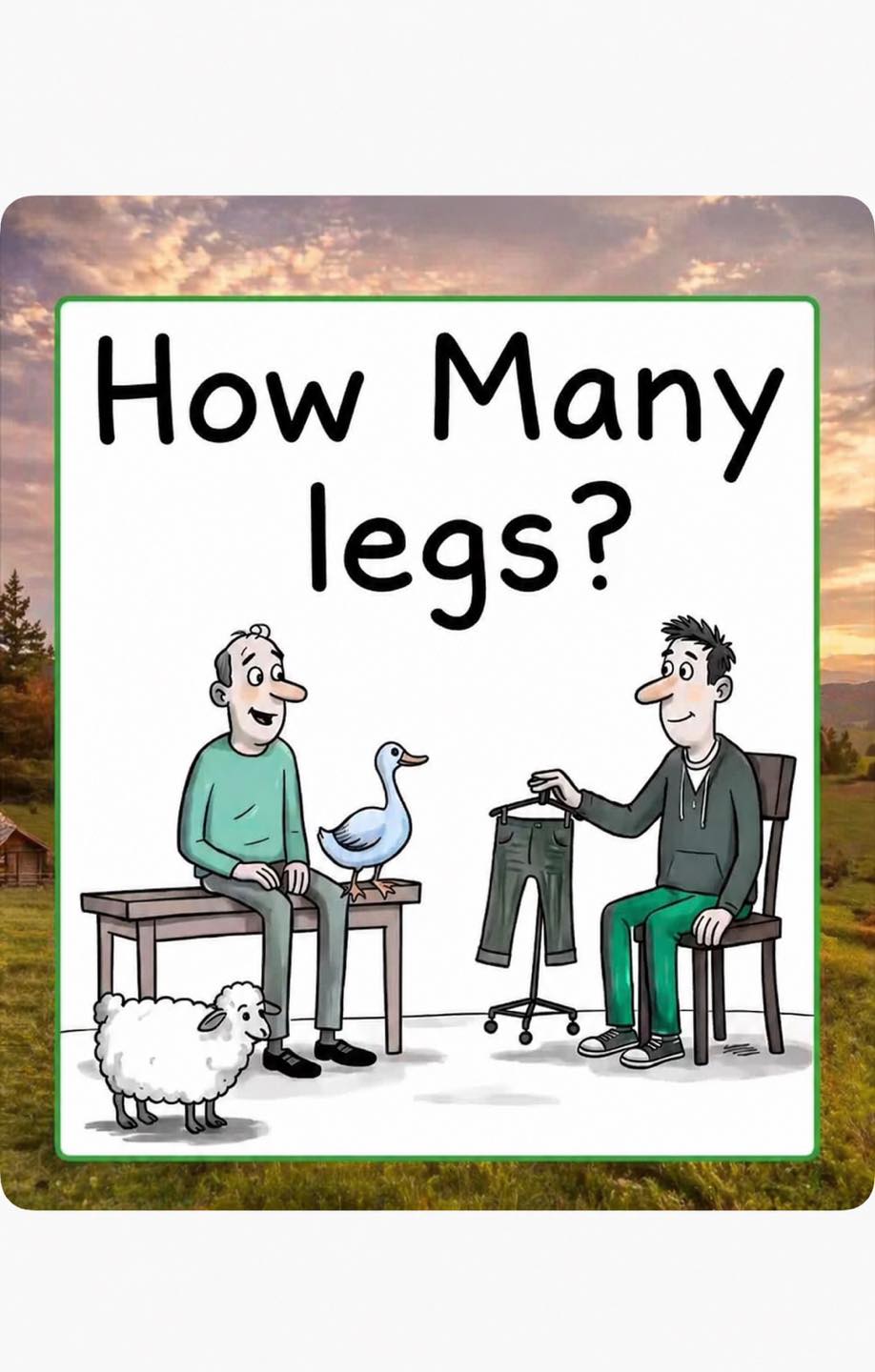
At first glance, it looks like a simple scene: two men sitting, a duck, a sheep, and a pair of pants hanging nearby. Nothing unusual—until you read the question: “How many legs?”
Your brain quickly starts counting:
2 men = 4 legs
duck = 2 legs
sheep = 4 legs
So far: 10 legs.
But then you hesitate. Something feels off. The puzzle isn’t just about obvious counting—it’s about attention.
You notice the pants. Many people try to add them too, but that’s the trick.
❗ Pants don’t have legs—they only have holes. They don’t count.
This puzzle tricks your brain into including anything that looks relevant, even if it isn’t alive.
✅ Final Answer:
10 legs total
- 2 men = 4
- 1 duck = 2
- 1 sheep = 4
- pants = 0