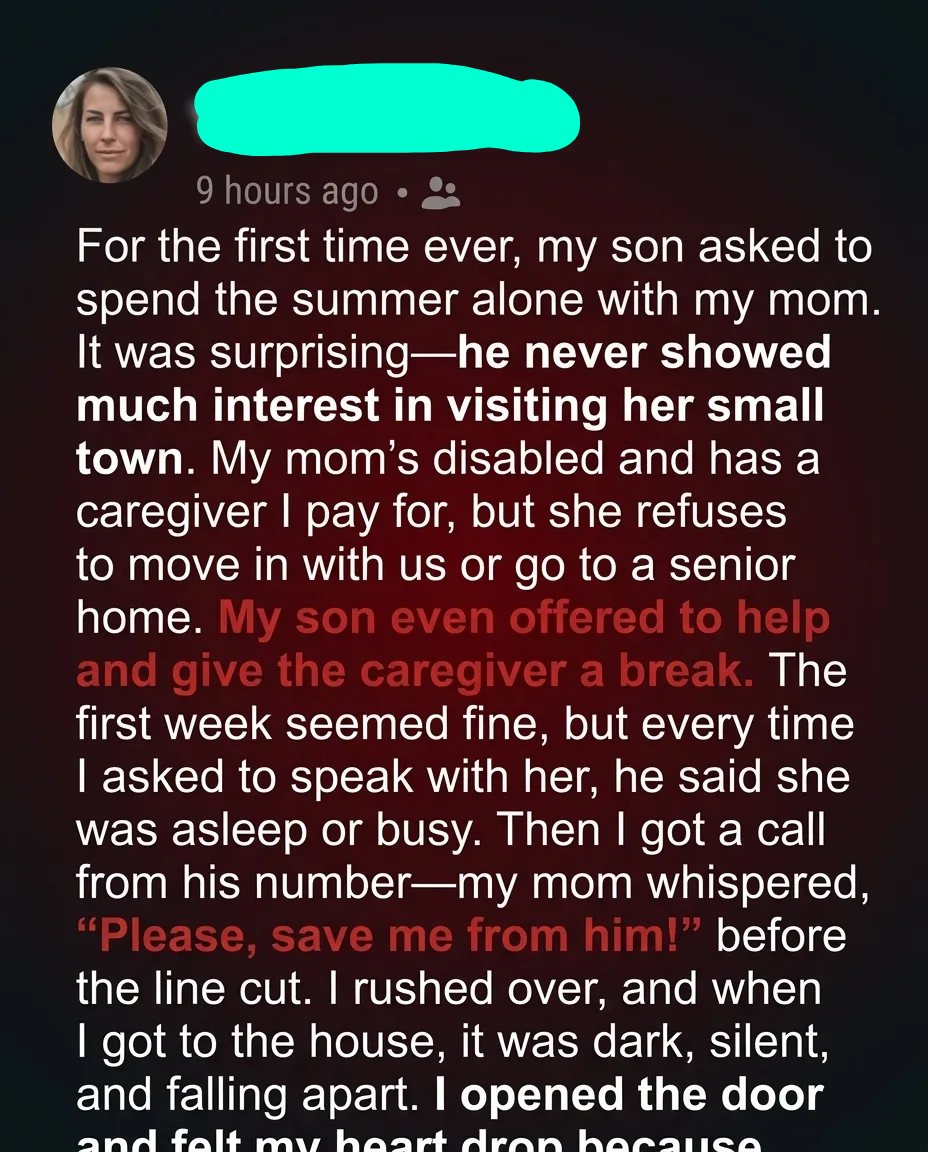
When my 16-year-old son offered to spend the summer caring for his disabled grandmother, I thought he was finally maturing. But one night, I received a terrifying call from my mother whispering, “Please, come save me from him!” before the line went dead.
Rushing to her rural home, I began replaying the warning signs I had ignored — my son always answering calls for her, acting overly charming, and convincing me she no longer needed a caregiver. When I arrived, loud music blasted from the house, the yard was neglected, and strangers filled the rooms drinking and partying.
Panicked, I searched for my mother and finally found her locked inside her bedroom, pale and exhausted. She tearfully admitted my son had started throwing parties, and when she protested, he began locking her away because she was “ruining his fun.”
Furious, I cleared the house and confronted my son. He acted defensive, claiming he just wanted freedom. I told him he’d face consequences: strict summer camp, loss of his electronics to pay for damages, and no freedom until he earned trust again.
That summer, while repairing my mother’s damaged home, I hoped my son would change. Slowly, he did. He became quieter, more responsible, and began helping without being asked.
Two years later, before leaving for college with honors, he returned to his grandmother’s house holding flowers. With genuine regret in his eyes, he finally apologized, showing he had become the person I always hoped he could be.