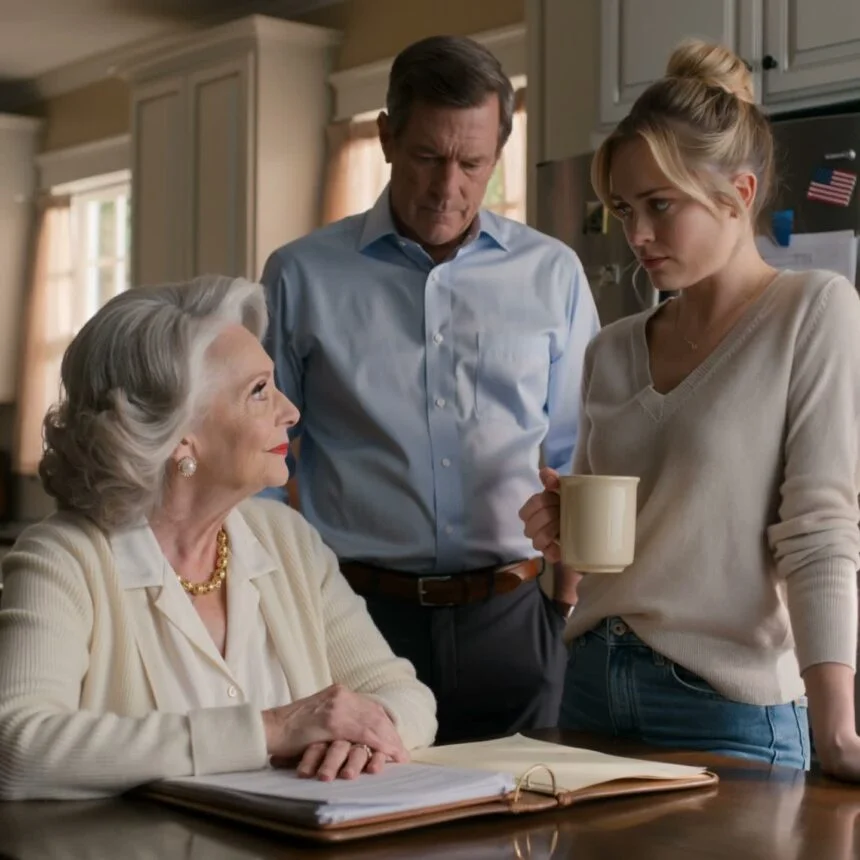
They served me last. Cold beans, dry chicken, no bread. Linda placed the plate in front of me like feeding me was a chore. Everyone else ate warm meals at the big table while I sat alone by the recycling bin in my own house.
That table used to be mine. My husband and I bought it in 1984 when we bought the house. Fifteen months earlier, my son John and his wife Linda had moved in “temporarily.” Slowly, they took over everything—my kitchen, my room, even my place in the family. They called me forgetful, moved my belongings, made “house rules,” and treated me like a guest in the home I paid for.
Then came the final insult: they suggested I move into assisted living so they could have more space. That night, I opened the old leather folder holding the deed, mortgage papers, and my late husband’s will. Every document carried one name: Mave Eleanor Eldridge. Sole owner.
The next day, I visited my lawyer.
Two days later, a formal eviction notice arrived at the house.
For the first time in months, the silence belonged to them.
They packed slowly, realizing too late that patience is not weakness. When they finally left, the house breathed again. My chair returned to the window, my photo hung above the fireplace, and my kitchen smelled like tea and fresh bread instead of tension.
I didn’t throw them out because I was cruel.
I did it because I remembered my name.