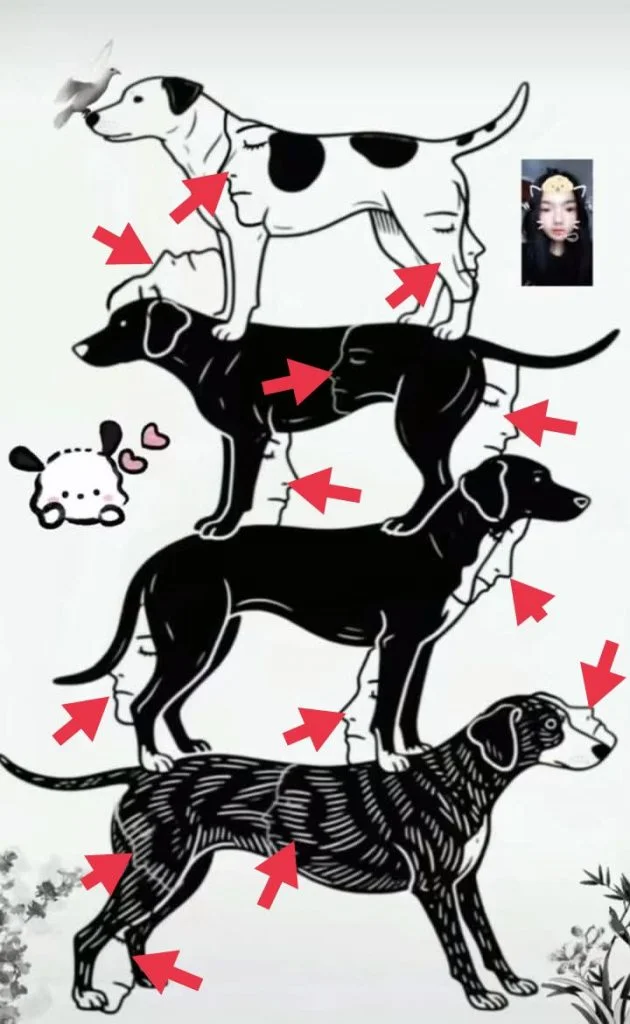
At first glance, this image looks simple—just a group of dogs. Most people quickly assume they understand it, but that’s exactly what makes this optical illusion effective.
The drawing is designed to hide multiple human faces within the dogs, blending them into shadows, outlines, and empty spaces. Because your brain immediately recognizes “dogs,” it ignores subtle details that don’t fit that pattern.
Once you notice the first hidden face, your perception changes, and more start to appear. Lines turn into facial features, and what looked ordinary suddenly feels full of hidden images.
People often disagree on how many faces are actually there—some say six, others seven or more. That’s because the illusion depends on how your brain interprets what it sees, not just what’s actually drawn.
The challenge isn’t about eyesight—it’s about perception. Your mind automatically groups shapes into familiar objects and filters out anything unexpected.
To solve it, you have to stop focusing on the obvious and search for details: eyes, noses, profiles, and faces hidden in negative space.
Now it’s your turn—look carefully and see how many human faces you can find.