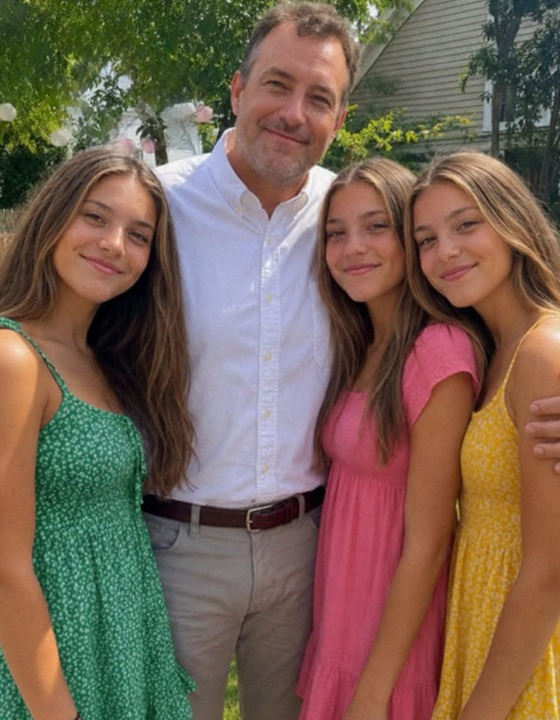
For fourteen years, I believed I buried my wife the day the river took her.
I raised our triplets alone, built a life out of silence, and turned grief into routine—braids in the morning, overtime at night, bedtime stories every evening.
Sarah was gone.
That’s what the police said. That’s what I told my daughters. That’s what I lived by.
Until their 16th birthday.
Maya came down the stairs holding the locked box from the attic.
And an envelope.
With Sarah’s handwriting.
“I’m alive.”
At first, I thought it was impossible. A cruel joke. A mistake.
But then I saw what was inside the box had been opened.
The ultrasound photo.
The locket.
The truth I had hidden from everyone.
And when I read the letter, my world broke:
She hadn’t died.
She had left.
She admitted it herself. Depression. Fear. A decision made in panic. A staged disappearance that fooled everyone—including me.
The river story. The crash. The memorial.
All of it—constructed by silence and assumption.
I drove six hours that night.
When I found her, she didn’t ask for forgiveness.
Only permission.
“To meet them… if they want me.”
And for the first time in fourteen years, I understood something unbearable:
I hadn’t lost my wife to an accident.
I had lost her to a choice I was never allowed to question.
And now my daughters had to decide if they would forgive the ghost of the woman who once chose to disappear.