I had barely been at the cabin a week when Gareth called.
Not asked. Not suggested. Announced.
“My parents will be staying at the lake house for a while,” he said, like he was confirming a reservation already made in his head.
I didn’t argue. Not because I agreed—but because I’d learned something over thirty-seven years in engineering: people who speak in assumptions don’t respond to emotion. They respond to structure.
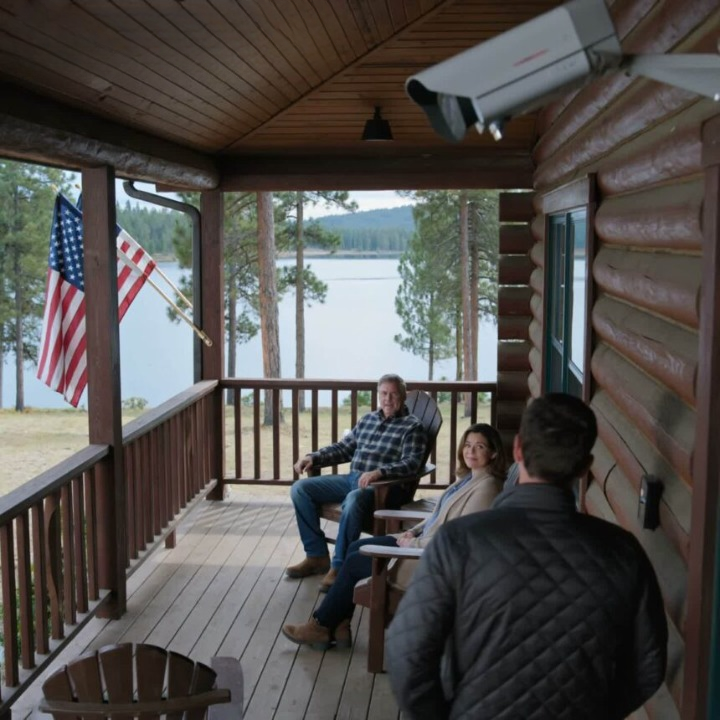
So I checked the property boundaries again. I reviewed the deed. I re-read the usage agreement I had written with the realtor down to the last clause. Then I installed three discreet security cameras under the eaves—one facing the driveway, one covering the dock, one aimed at the porch.
Not for drama.
For record.
Two days later, a car I didn’t recognize pulled into my driveway.
Earl and Pauline Nolan stepped out like they had been expected.
Gareth wasn’t with them.
That told me everything I needed to know.
I met them on the porch.
“There’s been a change of plans,” Earl said, polite but firm. “We’ve arranged to stay here.”
“No,” I said simply. “You haven’t.”
Pauline blinked. “Gareth said—”
“Gareth doesn’t own this property,” I interrupted. “Neither do you.”
Earl tried to smile it into something manageable. “It’s just temporary.”
I looked past him, toward the lake.
“Nothing about this is temporary unless I allow it.”
They left fifteen minutes later.
No shouting. No scene.
Just the quiet realization that the decision they thought was already made… wasn’t.
That evening, I checked the camera footage.
Every word. Every pause. Every assumption they had spoken out loud as if it were fact.
I didn’t send it to Gareth.
Not yet.
Some things don’t need to be escalated.
They just need to be documented.