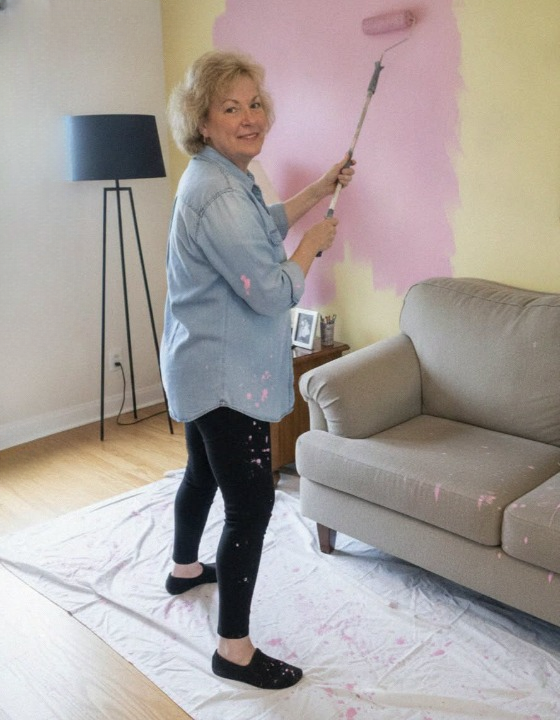
For years, Candice’s mother-in-law Agatha treated her house like it belonged to her.
Every visit meant new curtains, moved furniture, changed decorations, and unwanted “improvements.”
“This isn’t your house, sweetheart. It’s my son’s house,” Agatha would say.
The worst part? Candice’s husband Ian always defended her.
“She’s just trying to help,” he would say.
But after years of feeling like a stranger in her own home, Candice finally stopped arguing.
When Ian announced Agatha was coming again on Saturday, Candice simply smiled.
He had no idea she was preparing a surprise.
When they arrived, Agatha froze.
The furniture was moved away. The curtains were gone. The walls were empty. Everything looked like the house was being packed up.
“What happened?” Agatha asked.
Candice smiled.
“Don’t worry. I thought you’d like it. You always wanted this house to look your way.”
She revealed boxes labeled “Kitchen,” “Decorations,” and “Candice’s Things.”
Then she placed a folder on the table.
“I spoke to a lawyer. This house is mine too.”
For the first time, Agatha had no answer.
Candice finally told them the truth:
“I spent years asking to be respected in my own home. Nobody listened. So I stopped asking.”
Ian finally realized he had allowed his mother to cross every boundary.
“I should have stopped her,” he admitted.
But Candice knew an apology couldn’t erase years of pain.
She left that night.
Months later, after counseling and real changes, they started rebuilding their relationship — not in the old house, but somewhere new.
Because a home isn’t just walls and furniture.
It’s the place where you feel respected.