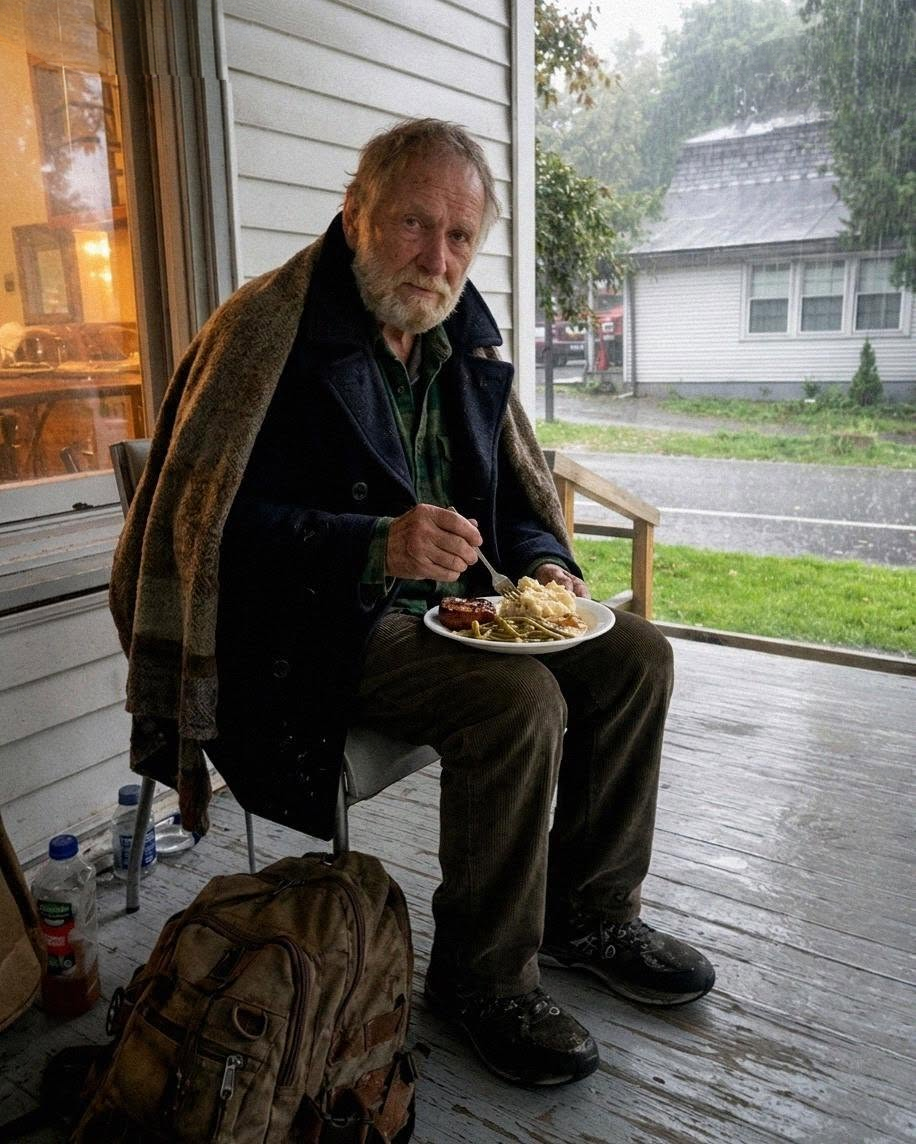
A Homeless Man Slept on My Porch During a Storm—Then I Found What He Left Under My Doormat
I’m Martha, 47. Two years ago, my husband, Mark, ended our 21-year marriage and left me with our eight-year-old daughter, Lily.
I’d trusted him with everything—our money, our house, and every document he asked me to sign.
He kept the house and most of our savings.
I rented a tiny duplex and did everything I could to give Lily a normal life.
Then one night, during a violent summer storm, I saw an elderly homeless man huddled beneath a tree.
“Sir! Come inside!”
He refused, but eventually asked if he could sleep on my covered porch.
I gave him cushions, a towel, my warmest blanket, and dinner.
“You have enough to worry about without taking care of an old man,” he said.
I smiled.
“Tonight, I have enough for both of us.”
Before I went inside, he asked my name.
“Martha.”
“Thank you, Martha.”
The next morning, he was gone.
His blanket was neatly folded on my doormat.
Then I noticed something underneath it.
An envelope.
My name was written on the front.
Inside was an old property transfer document for my former home—the house Mark had taken during our divorce.
The original owner was named Richard.
A handwritten note was attached:
“Martha—he had no right to take this house. Please don’t tell Mark you saw this. —R.”
I froze.
How did this stranger know Mark?
I called my ex-husband.
“Do you know someone named Richard?”
There was a long silence.
Then Mark’s voice changed.
“Who talked to you?”
He wasn’t angry.
He was scared.
I found the old man the next day.
His name was Richard.
And when I asked how he knew Mark, he finally told me the truth.
Richard was Mark’s father.
He had once owned the house—and part of the business Mark claimed to have built himself.
Richard explained that years earlier, after his wife died, Mark had taken advantage of him while he was grieving. He gave him documents to sign, telling him they were routine.
The same thing Mark had later done to me.
Richard had kept the original paperwork proving it.
With the help of a legal-aid attorney, I gathered Mark’s emails, the old documents, and Richard’s testimony.
Three weeks later, Mark walked into a conference room expecting to settle everything quickly.
Then Richard walked in.
“Hello, son.”
Mark went pale.
The evidence showed a pattern: he had used the same deception against his father that he later used against me.
Faced with the documents and the possibility of court, Mark finally signed the settlement.
The house was returned to me, and much of the money he had taken was recovered.
For the first time, I signed a legal document without blindly trusting anyone.
I read every single line.
Later, Richard stood outside my house.
“Who is he?” Lily asked.
I looked at her.
“Your grandfather.”
Lily opened the door.
“Come inside. We have a couch.”
Richard smiled and stepped inside.
The same man who had arrived as a stranger in a summer storm had given me more than a house.
He had given me the truth.
And he taught me something I’ll never forget:
Trust should never mean surrendering your right to know the truth.