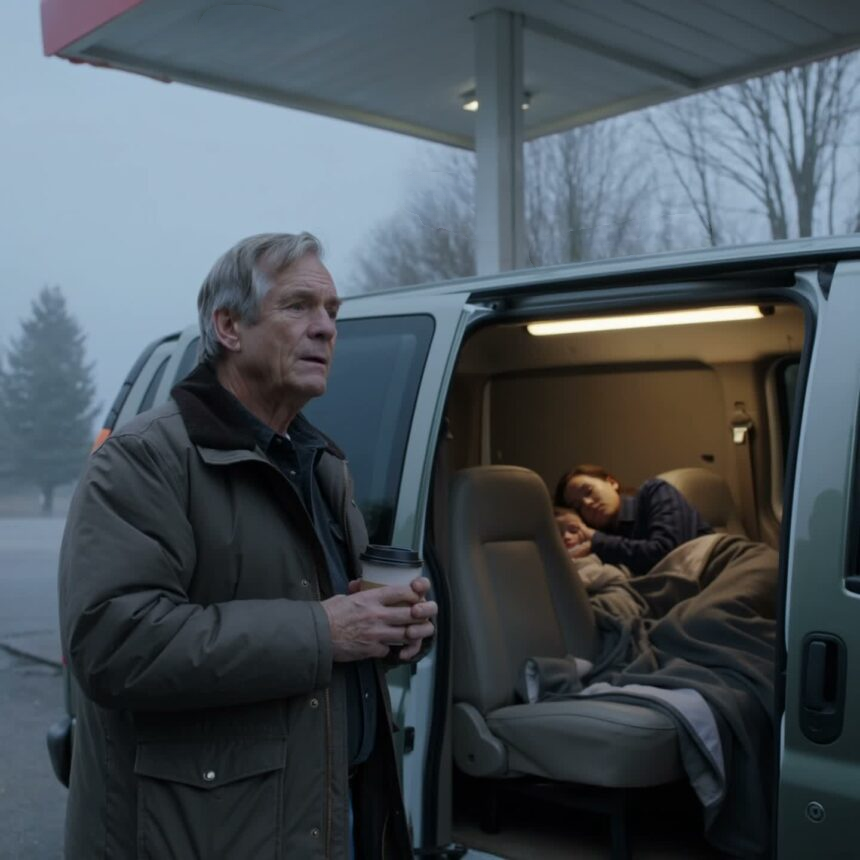
At 67, I thought I had already lost everything—until I saw my daughter sleeping in a van at a gas station.
Five years earlier, I had told Maya, “If you marry Marcus, don’t call me your father again.” Pride kept us apart. Then my wife died, and Maya disappeared from my life.
Years later, she called asking for help with a condo. I gave Marcus every penny of our savings for the down payment, believing my daughter would finally have a safe home.
Instead, I found Maya living in a van with her seven-year-old son, Malik.
“Where’s the apartment I bought for you?” I asked.
Her eyes filled with tears.
“Marcus and his mother, Beatrice, changed the locks. They threw Malik and me out. They kept my baby, Aaliyah, inside. I can’t get to her.”
They had taken her phone, ID, and the children’s documents. They called her an unfit mother because of her postpartum depression and treated Malik cruelly because of his developmental delays.
I brought them home.
The next morning, I found an old folder containing bank transfers proving I had paid for the condo. Inside was also a note from my late wife:
“If this money is ever used for anything other than Maya and her children, don’t stay silent.”
I called my old friend Xavier, a lawyer.
Together, we confronted Marcus and Beatrice. They claimed Maya had abandoned her baby and was unstable.
But we kept digging.
A nurse testified about their behavior. A doctor confirmed Maya was receiving treatment and was not unfit to parent. Then we discovered something that could change everything:
Security cameras had recorded the night Maya was thrown out.
The footage showed Maya crying in the hallway with Malik while Marcus and Beatrice refused to let her back inside.
We took the evidence to court.
Marcus’s lawyer tried to paint Maya as unstable. But the witnesses, financial records, medical evidence, and security footage told another story.
Then Beatrice made a terrible mistake.
In court, she admitted they were ashamed of Malik and called Maya weak and unfit.
The judge’s decision came soon after.
Maya regained custody of her children, and the court recognized the financial contribution my family had made toward the condo.
Seven days later, Marcus brought baby Aaliyah to us.
When Maya finally held her daughter again, she whispered:
“Forgive me, baby girl. Mama was late.”
But she wasn’t alone anymore.
We rebuilt our lives together. Malik began therapy, Aaliyah grew healthy, and Maya slowly found her strength again.
One night, I watched my daughter sleeping peacefully beside her children.
I remembered the gas station—the van, the cold, and the fear in her eyes.
I had almost lost my daughter forever.
But this time, I showed up.
I pulled the blanket over her shoulders and whispered:
“Sleep well, daughter. You’re home now. We all are.”