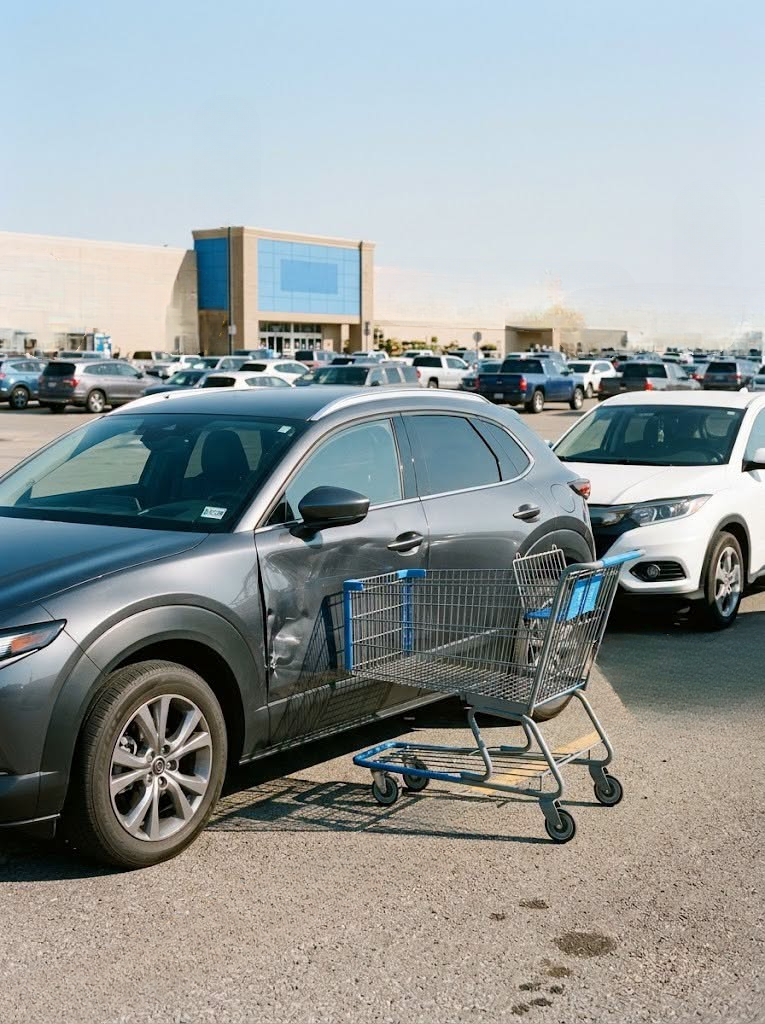
I refused to argue with a woman over a shopping cart at Walmart. Forty minutes later, I returned to find my driver’s door badly dented — and the same woman standing nearby, laughing.
My name is Amanda, I’m 34, and I’d only gone to Walmart to buy groceries for my family. My husband was home with our two children, so I wanted to finish quickly.
As I grabbed a cart near the entrance, a woman in a red sweater shouted, “Excuse me! That was MY cart!”
There were at least twenty others available.
“I’m sorry,” I said. “There are plenty of carts.”
She rolled her eyes. “You selfish little brat!”
People turned to watch, but I refused to argue. I took the cart and went inside.
By the time I finished shopping, I’d nearly forgotten the encounter.
Then I walked into the parking lot.
A shopping cart was wedged against my driver’s door. The metal had left a deep dent and a long scrape across the paint.
Across the lot, the same woman stood beside her white SUV, watching me. When our eyes met, she smiled and laughed.
I approached her.
“Did you do that?”
She shrugged. “Maybe you shouldn’t park where carts can hit your car.”
I took out my phone to photograph her license plate. She stepped in front of it and demanded that I stop.
Instead of arguing, I called store security.
A manager named Chris and a loss-prevention employee named Tasha arrived. They inspected the damage and checked the surveillance footage.
What they discovered left everyone silent.
The cameras showed the woman returning from her SUV, looking toward my car, and deliberately pushing the cart across the parking lot. It slammed into my driver’s door.
Then she grabbed it and shoved it into my car a second time.
When confronted with the footage, she claimed the cart had gotten away from her.
But Tasha pointed out that she had grabbed it after the first impact.
The woman finally blurted out, “She stole my cart!”
That was her excuse for damaging someone else’s property.
Police arrived, reviewed the footage, photographed the damage, and took statements. I decided to make a report rather than let the incident go.
Suddenly, the woman who had called me insane wanted to settle everything privately.
“I’ll pay for the scratch,” she offered.
“It isn’t just a scratch,” I replied.
The repair estimate came to more than $2,800. My insurance covered the repairs minus my deductible while reimbursement was pursued. I was left without my car for several days, rearranging school pickups, appointments, and work because a stranger couldn’t handle not getting the shopping cart she wanted.
The video became the strongest evidence in the case, and the woman had to face the consequences of her actions.
There was no dramatic courtroom scene or magical moment of revenge. There was paperwork, financial responsibility, and embarrassment.
A few weeks later, I returned to Walmart. I still felt tense near the cart area, but I grabbed a cart and continued shopping.
An older man nearby asked politely, “Sorry, were you taking that one?”
For a moment, I froze.
Then I smiled. “Yes, but you can have it.”
He simply took another cart.
Nobody shouted. Nobody insulted anyone. Nobody damaged a car.
And that was the point.
The problem was never really the shopping cart. It was someone believing that anger gave her permission to hurt another person.
I didn’t need to scream back or take revenge. I stayed calm, documented what happened, and let the evidence speak for itself.
Sometimes walking away from an argument is the smartest choice. But staying calm doesn’t mean allowing someone to get away with damaging your property.
What do you think? Did Amanda handle the situation correctly by staying calm and letting the evidence speak for itself?