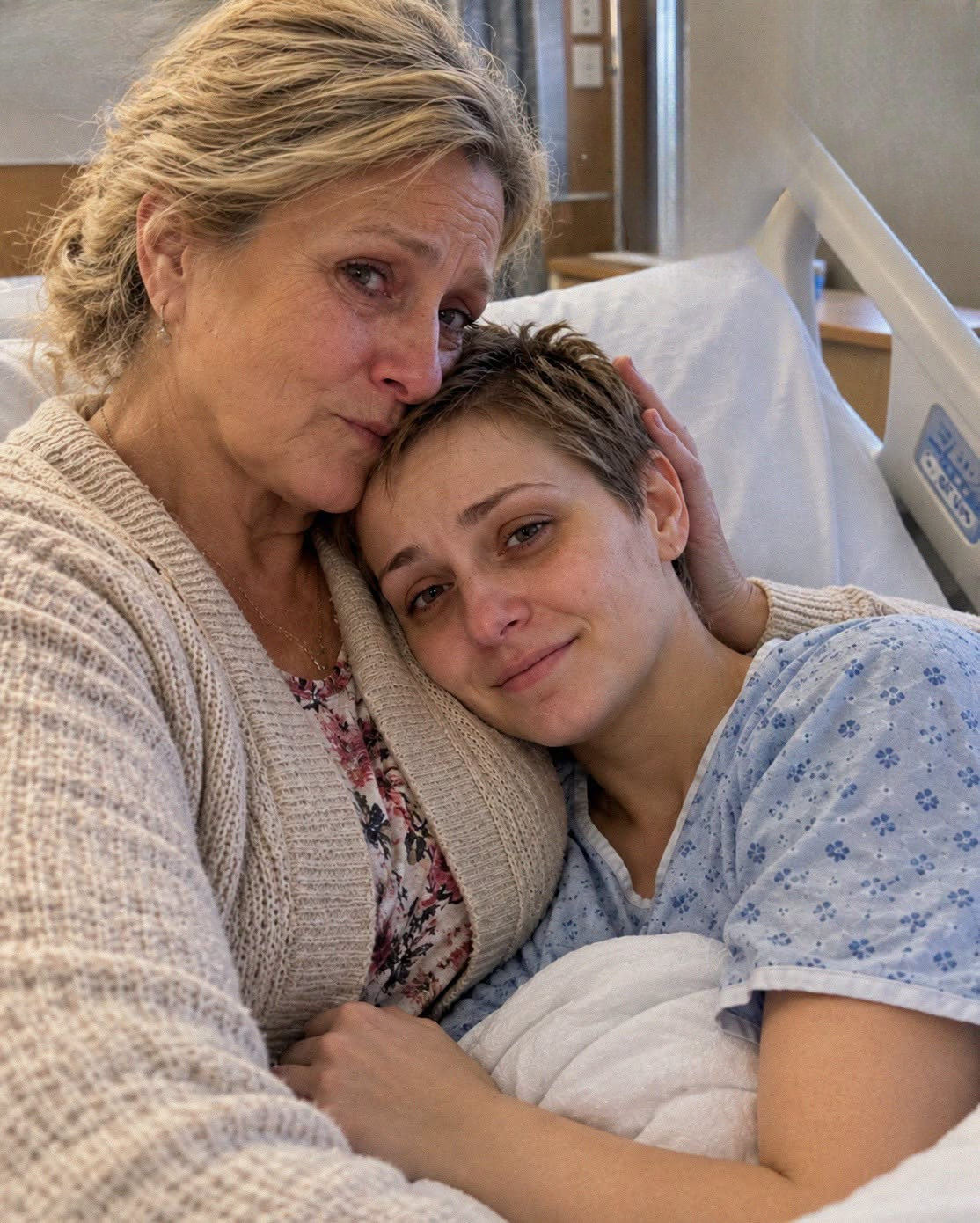
I thought losing my daughter was the worst thing I would ever experience. Then, six days after her funeral, I discovered she’d been keeping a secret that changed everything I knew about my own life.
I’m Angelica, 63. My daughter, Emma, was only 30 when she died after nearly two years of illness. She was my only child, and after losing my husband when Emma was young, we’d always had just each other.
During her final days, Emma asked me to do one last thing.
“Mom, there’s a wooden box in my bedside drawer. After I’m gone, please deliver it to the address underneath. Give it to the man who lives there, and promise me you won’t open it.”
I promised.
Almost a week after her death, I drove to the address and handed the box to an elderly stranger named Arthur.
The moment he opened it, his face turned pale.
“So she kept her promise,” he whispered. “Even from you.”
I stared at him, confused.
“What promise?”
Instead of answering, he asked me a question that made my heart stop.
“Do you remember the yellow bicycle you had when you were six?”
Nobody had mentioned that bicycle in more than fifty years.
Arthur invited me inside and showed me an old photograph album. The first picture was of a little girl standing beside a yellow bicycle.
It was me.
Then he showed me another photograph: a man carrying me on his shoulders at a summer fair. I remembered that day. I remembered the man’s eyes, his scar, and the nickname he’d used for me.
“Hello, my Angel,” he whispered.
I stared at him in disbelief.
“Tom? My father?”
He nodded through his tears.
But my mother had always told me my father had abandoned us. I’d grown up believing he no longer wanted me in his life.
Arthur explained that after separating from my mother, he’d tried to contact me. He’d written birthday cards and letters, but many were returned. When he eventually found us, he’d been told I didn’t want to see him.
He admitted he’d made mistakes, too. Instead of continuing to fight to be part of my life, he’d eventually convinced himself I was better off without him.
I felt angry, heartbroken, and confused. For decades, I’d believed my father had forgotten me. Now I was discovering that the truth was far more complicated.
Then I asked the question that mattered most.
“How did Emma find you?”
Arthur explained that five years earlier, my daughter had discovered my father’s full name in some old documents and tracked him down.
She’d arrived at his door and asked whether he was her grandfather.
At first, she questioned him about why he’d disappeared. But over time, they built a relationship. She visited him, helped him around the house, and learned about the father I’d never known as an adult.
And she’d kept their relationship secret from me.
Arthur said Emma had wanted to tell me, but whenever she brought up my childhood, I’d insisted that the past should remain in the past. When she became seriously ill, she worried that revealing the truth would hurt me even more.
Then Arthur opened the wooden box again.
Inside was an old photograph, a small silver key, and a letter addressed to me.
My hands trembled as I read it.
“Mom, I’m sorry I kept Grandpa a secret. When I found him, I wanted to understand why he left you. He admitted he’d made mistakes, but he never stopped loving you.
“I couldn’t bear the thought of you being alone after I’m gone. I know Grandpa can’t replace me, and nobody ever will. But I wanted you to have someone else who loves you.
“You always told me family was worth fighting for. Please give him a chance.
“I love you forever.
“Emma.”
I pressed the letter against my chest and began to cry.
Arthur gently put his arms around me.
“She talked about you constantly,” he whispered. “She said you were the best mother in the world.”
For the first time since Emma died, I cried without feeling completely alone.
Before I left, Arthur showed me a half-finished scarf Emma had been knitting for me. She’d never managed to finish it before she became too ill.
He asked whether I’d like to finish it with him.
Neither of us knew how to knit properly.
But we laughed anyway.
Three weeks later, I returned to his house. Slowly, we began building a relationship we’d both lost decades ago. We shared meals, exchanged stories about Emma, and talked honestly about the past.
We couldn’t recover the years we’d lost, and nothing could make losing Emma easier. But we could choose what happened next.
One afternoon, we sat together in his garden beside the roses Emma had planted. A small wooden sign stood nearby.
It read:
“For the family we found again.”
I took my father’s hand.
My daughter had known she couldn’t stay. But even as she faced the end of her own life, she’d found a way to bring someone back into mine.
At 63, I finally had the chance to be someone’s little girl again.
And I knew exactly who I had to thank.
My daughter, Emma. ❤️