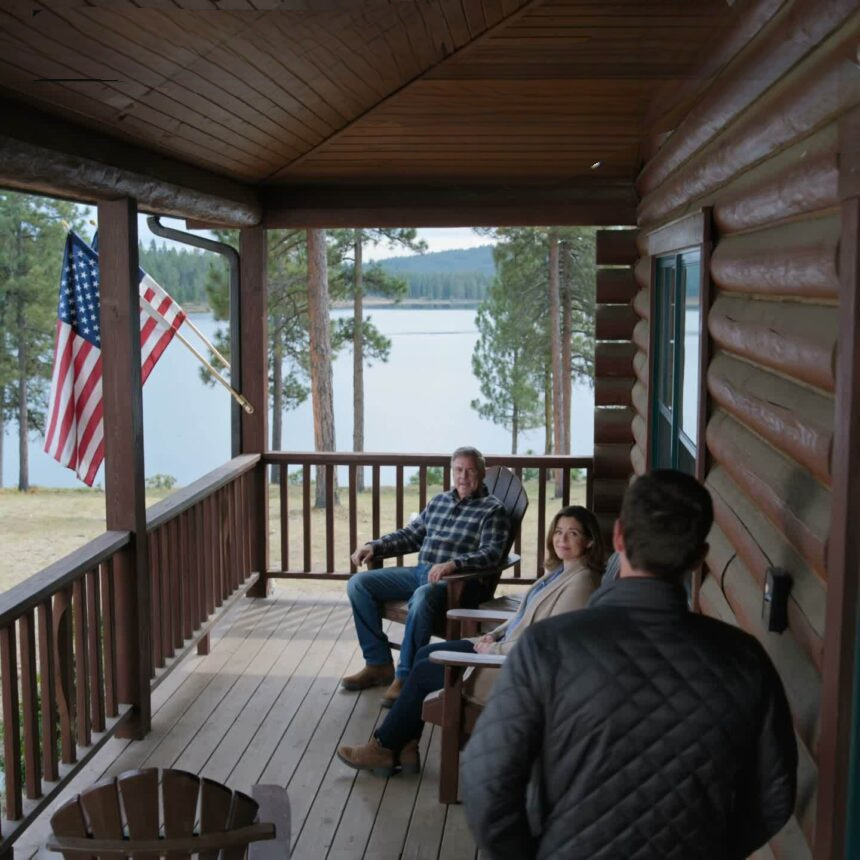
At 63, I retired after 37 years as a structural engineer and bought a lake house in northern Minnesota. I paid $220,000 with money I had earned and saved myself. All I wanted was peace.
But just two days after I arrived, my son-in-law, Gareth, called with a demand.
“My parents need somewhere to stay for a few months,” he said. “The cabin has three bedrooms, and you’re only one person.”
When I refused, he told me I should sell the property and return to Chicago, where I could be “useful to the family.”
I knew then that something wasn’t right.
I contacted a lawyer, reviewed my insurance policy, and installed three motion-activated security cameras around the property.
A few days later, Gareth’s parents arrived without my permission. They insisted he had arranged everything. I calmly told them they had no right to stay and asked them to leave.
They finally drove away, but Gareth wasn’t finished.
Weeks later, my cameras caught him walking through my cabin with a couple who appeared to be potential buyers. He was showing them the lake views, fireplace, and deck—as if he owned the property.
I immediately sent the footage to my lawyer.
Then a private investigator uncovered something even more disturbing: Gareth had been transferring money from his joint account with my daughter, Diane, to his father’s accounts. Nearly $48,000 had disappeared into his father’s financial problems.
When I showed Diane the evidence, her world began to fall apart. Gareth had told her the money was funding an investment. In reality, his father’s apartment had been foreclosed, and the family’s financial troubles were far worse than she knew.
Then came the most shocking discovery: Gareth had opened a line of credit in Diane’s name without her knowledge.
He had been using her money and credit to cover debts while making her believe everything was under control.
Diane finally realized the truth. She gathered her daughter’s belongings, secured important documents, contacted her lawyer, and left the marriage.
Gareth tried to intimidate us, challenge my ownership, and even make an anonymous complaint suggesting I was no longer capable of caring for myself. But every move was documented. The complaint was dismissed, and the financial evidence kept exposing his lies.
One morning, Gareth drove to my lake house demanding to speak to Diane. I stepped onto the porch and told him to leave. When he refused to back down, a sheriff’s deputy arrived and ordered him off my property.
For the first time, Gareth had no audience willing to believe his version of events.
The legal battle took months, but the records spoke for themselves. Diane began rebuilding her life, and she and my granddaughter eventually found peace at the lake house.
One evening, my granddaughter asked me a question while we sat beside the water.
“Grandpa, if someone says your house is their house, but it isn’t, do they know they’re lying?”
I thought about Gareth, the cameras, and everything we had endured.
“Sometimes,” I told her. “Sometimes people tell a lie so many times that they start believing it themselves.”
“What do you do then?” she asked.
“You tell the truth anyway.”
I had bought the cabin to protect my peace. In the end, it became a safe place where my daughter and granddaughter could start over.
And the cameras that once protected my property became a reminder of something much bigger: never let someone convince you that protecting what you’ve earned makes you selfish.